Why I Started Making Bingo Games for Middle School (And Why Teachers Love Them)
Happy St. Patrick’s Day! 🍀
Today I’ve been reflecting on the kinds of resources I’ve been creating lately and the direction my Teachers Pay Teachers store has been taking.
Over the past year I’ve made a lot of lessons for Washington State history, earth science, geology, and chemistry. Like many teachers who create resources, I often start by building things I actually need in my own classroom.
But something started to stand out to me.
There are a lot of worksheets and slides available for middle and high school subjects.Washington State history, earth science, geology, and chemistry.
But when it comes to whole-class games and activities that review content in an engaging way, the options are surprisingly limited.
Especially for older students.
The Engagement Problem in Middle School
Middle school students sit in a strange space between elementary and high school.
They still enjoy games and interactive learning, but most classroom materials for this age group shift heavily toward:
independent work
worksheets
lectures
slide presentations
These tools can absolutely be useful, but they don’t always create the kind of energy and participation that helps students remember content.
And review days can become especially repetitive.
Teachers need activities that allow students to:
stay engaged
review key concepts
participate as a class
think critically about the content
That’s when I started thinking about game-based review activities.
Discovering a Small but Promising Niche
Out of curiosity, I started searching Teachers Pay Teachers to see what kinds of review games already existed for middle school science and social studies.
What I found was interesting.
There are some bingo-style review games on TpT.
And that’s actually a good sign.
It tells me that teachers are interested in these types of activities and that there is a real classroom demand for them.
But compared to the number of worksheets and slides available, there are still very few whole-class games for subjects like earth science, chemistry, and state history.
That felt like an opportunity.
Why Bingo Works So Well in the Classroom
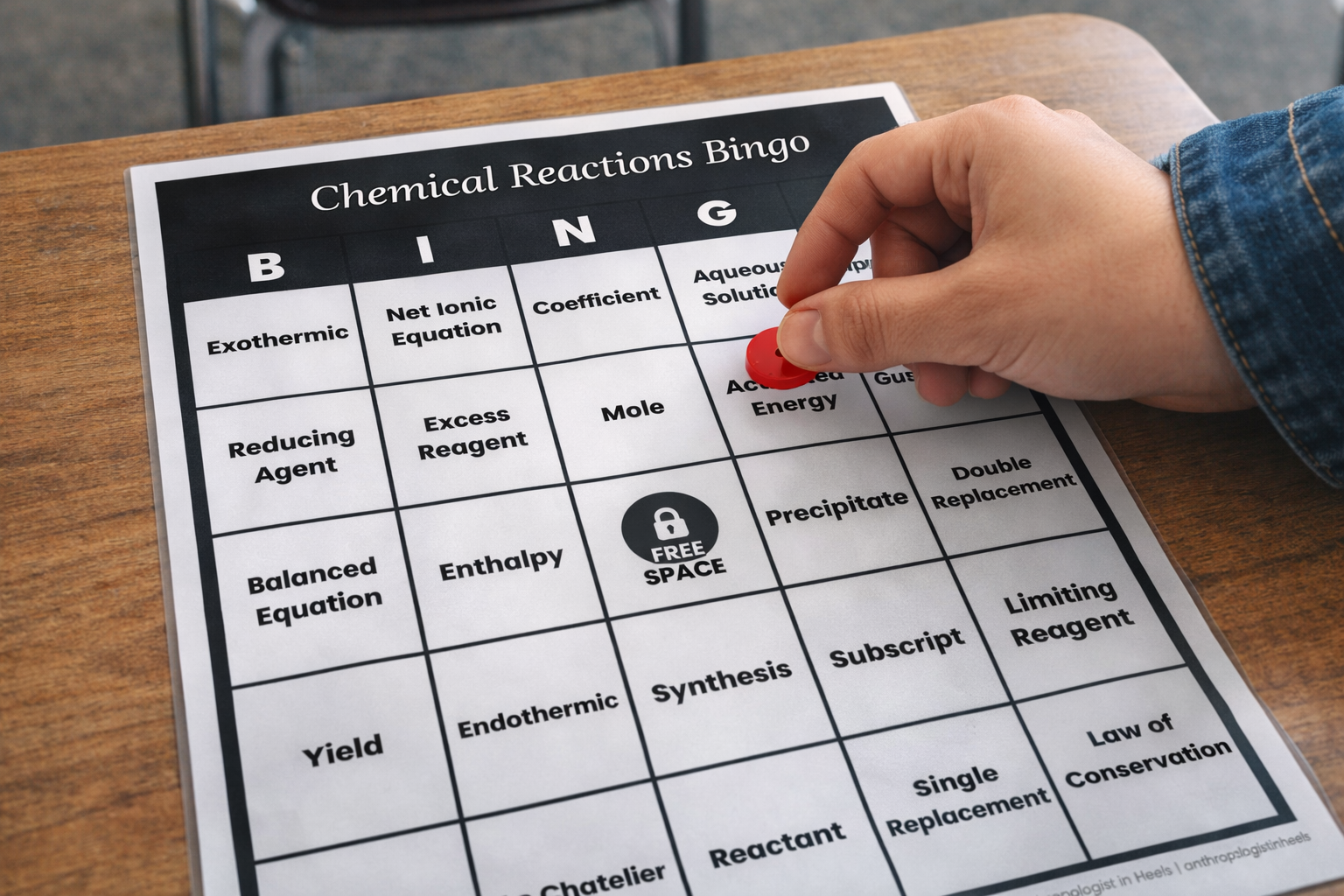
Bingo is one of those rare activities that works across grade levels.
It has a simple structure that students immediately understand, but it can also be used to review complex academic content.
Here’s why teachers tend to love it:
It’s low prep
Once the cards are printed or assigned digitally, the activity is ready to go.
Everyone participates
Unlike some games where only a few students answer questions, bingo keeps the whole class involved.
It reinforces vocabulary and concepts
Students must listen carefully and identify the correct term, definition, or concept on their boards.
It works for review days
Bingo is perfect before tests or at the end of a unit.
It keeps the classroom energy positive
Students often forget they are reviewing content because the activity feels like a game.
The Types of Bingo Games I’ve Been Creating
Once I realized this was a useful format, I started developing bingo games across several subjects.
Science Bingo Games
These focus on major middle and high school science concepts such as:
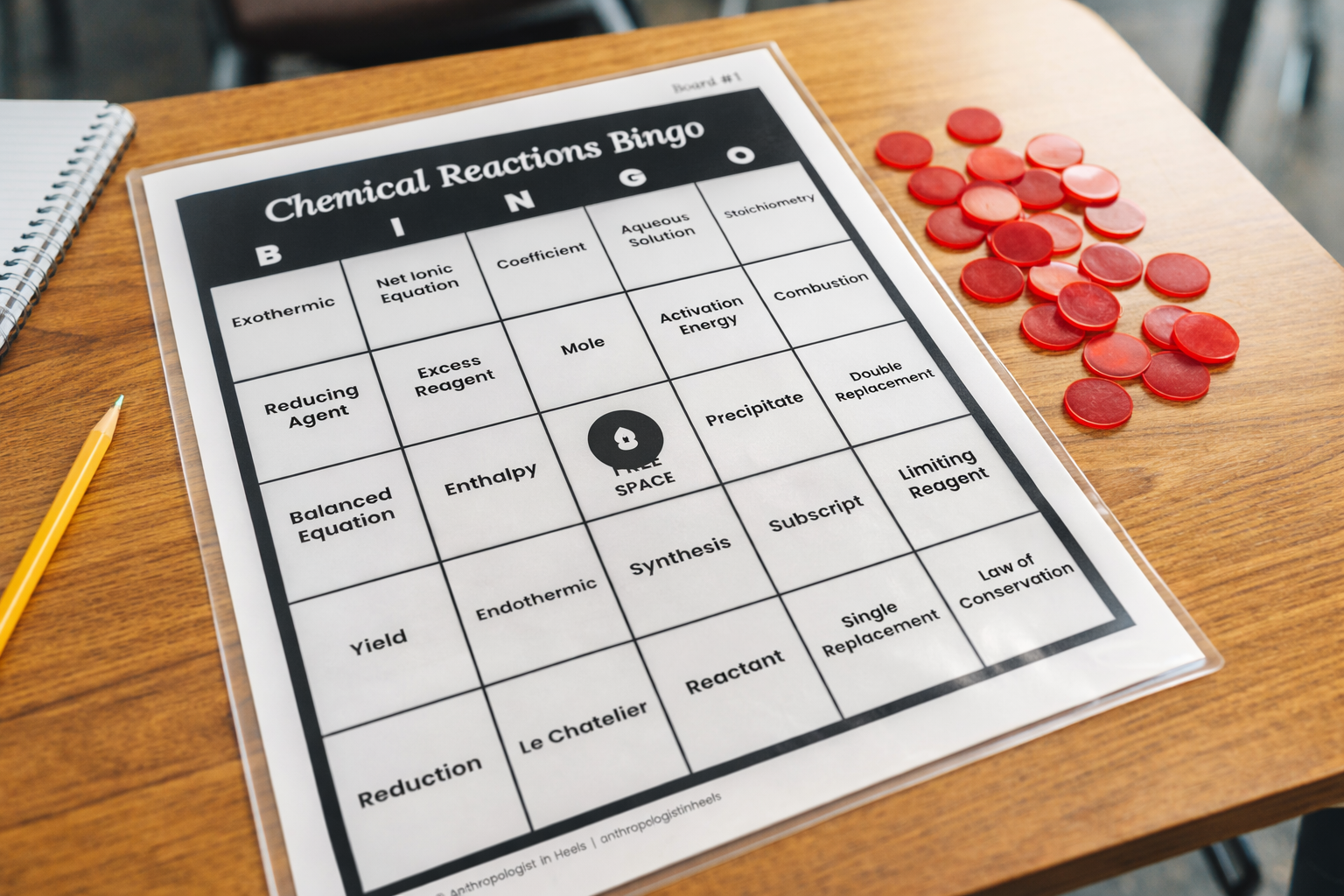
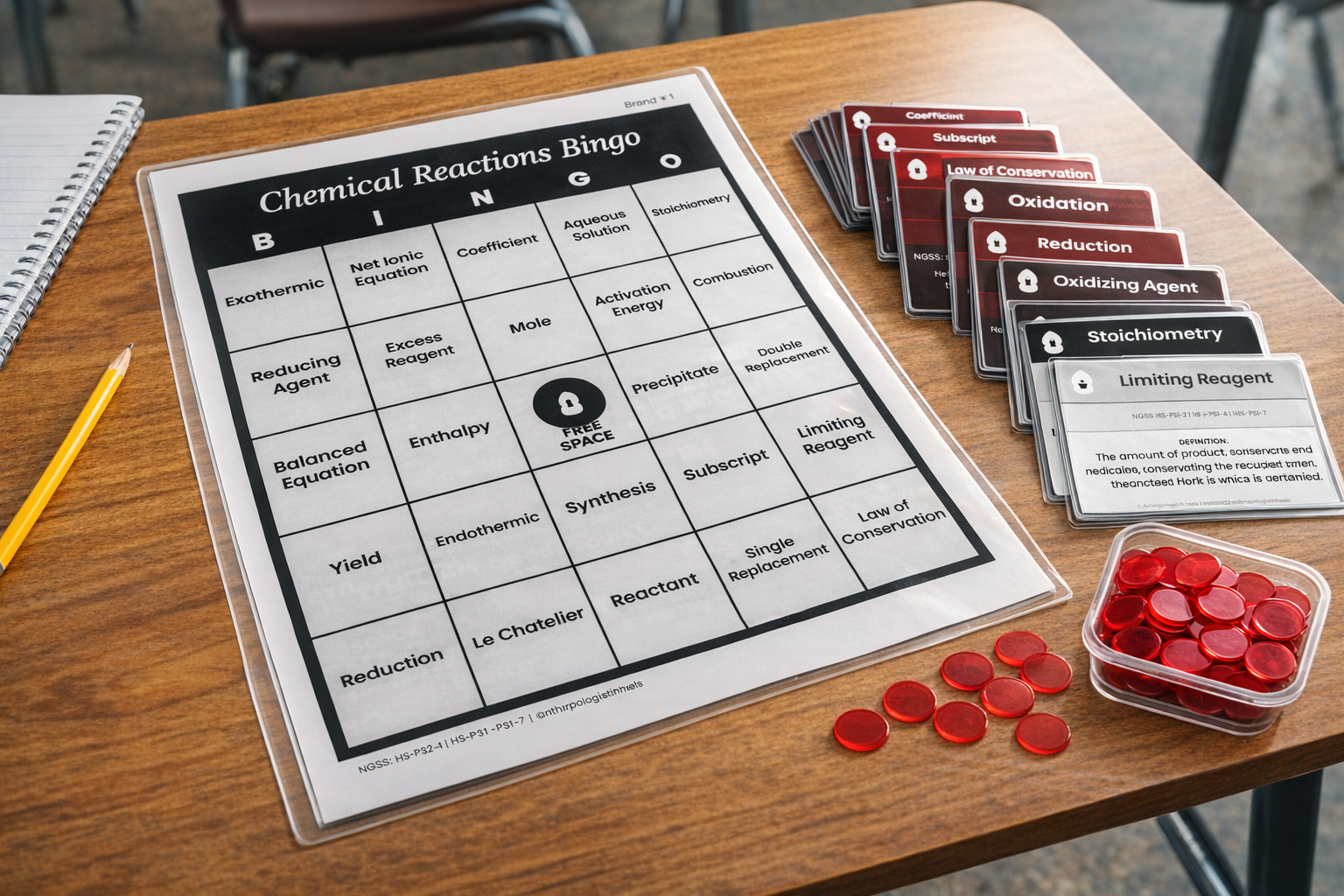
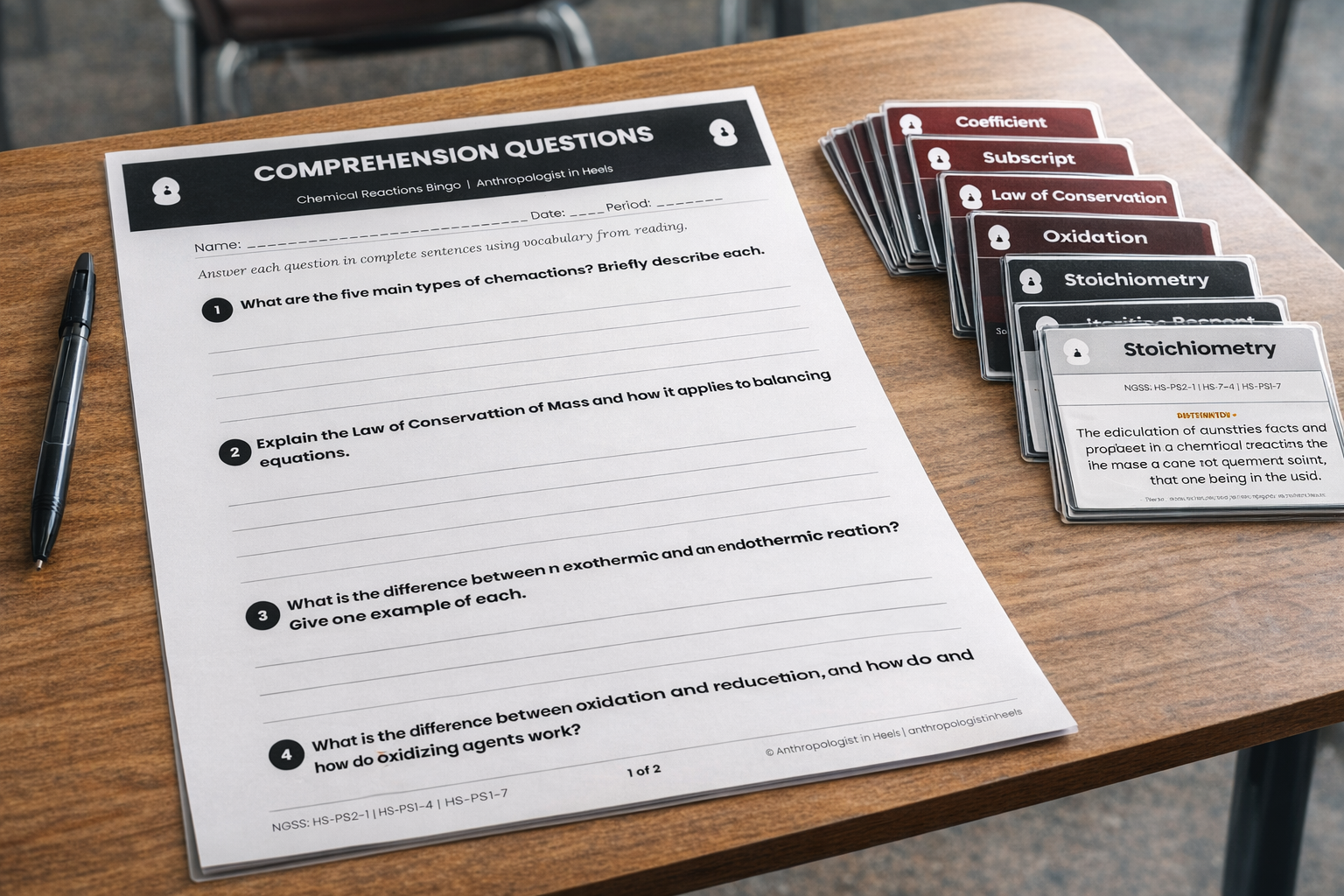
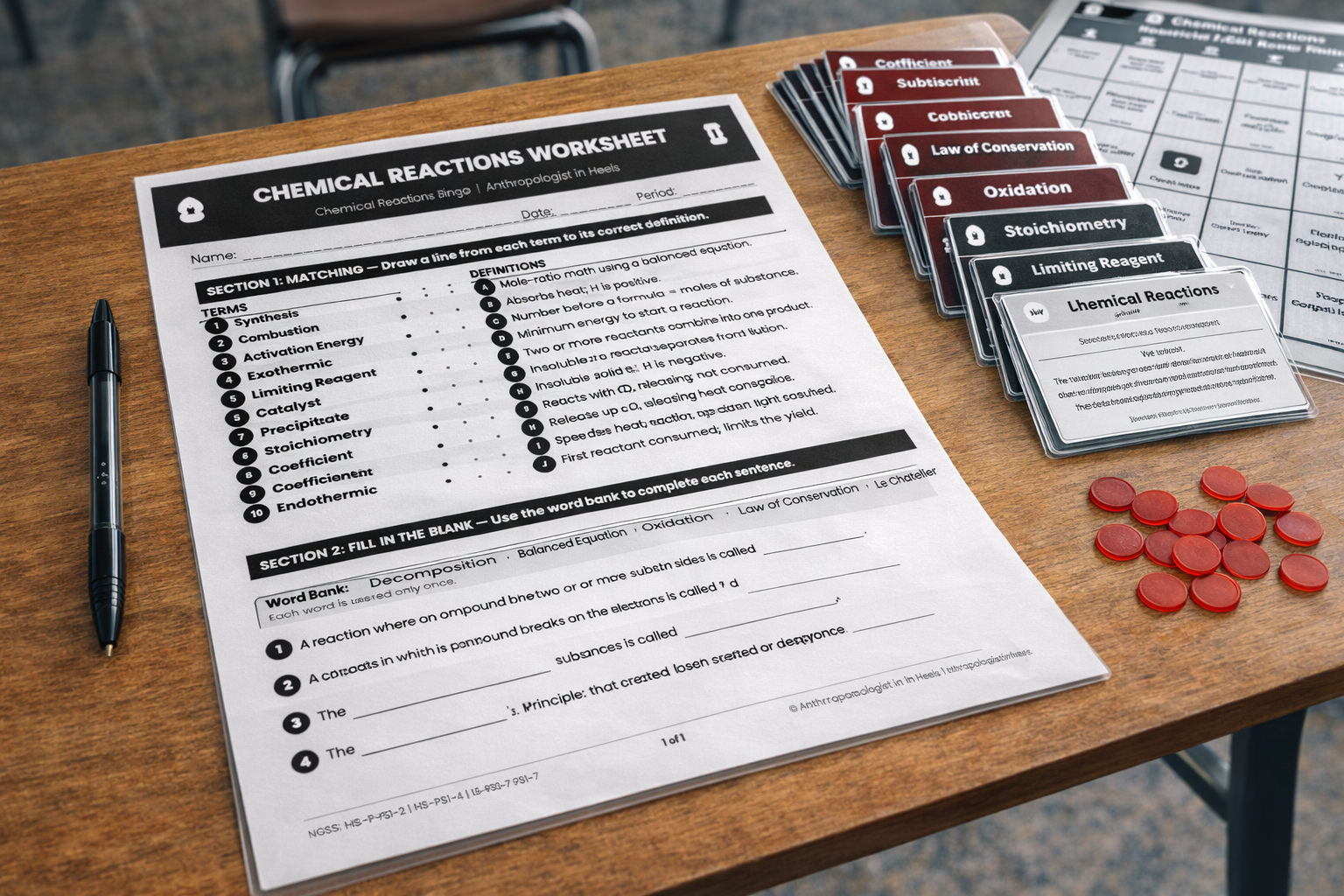
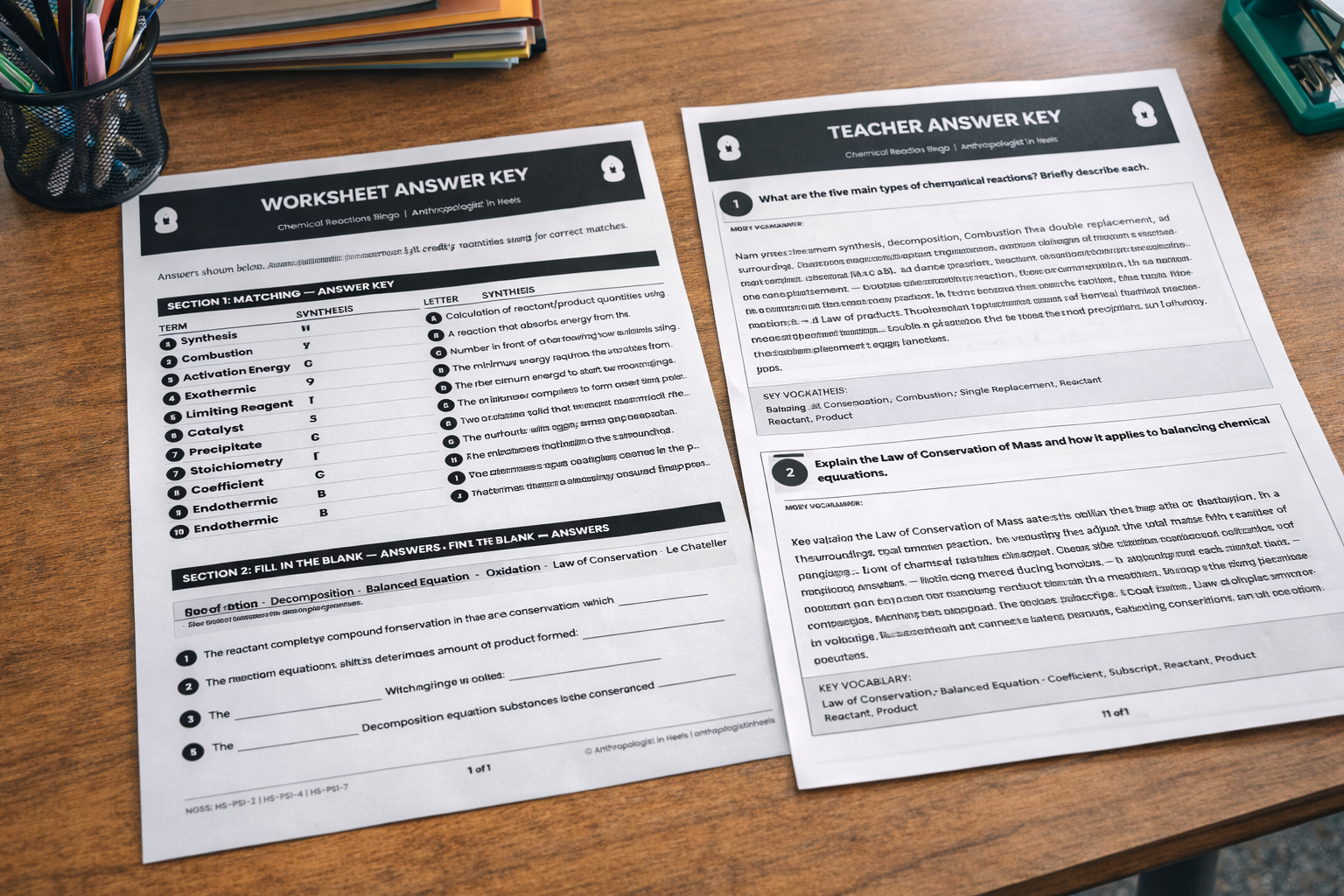
Chemical reactions
Chemical bonding
Atoms and atomic structure
Polyatomic ions
These activities help students review terminology and concepts that often appear on unit tests.
Earth Science & Climate Topics
I’ve also created bingo games that focus on key earth science units:
Plate tectonics
Climate change
Ice ages and Milankovitch cycles
These topics can sometimes feel abstract for students, so a review game helps reinforce the big ideas in a more interactive way.
Cross-Disciplinary Topics
One of my favorite resources so far is a Manhattan Project bingo game.
This topic connects:
science
history
global politics
It’s a great example of how review games can help students see connections between subjects.
Social Studies and Geography
In addition to science, I’ve been creating bingo games for social studies topics such as:
Georgia geography
Colonial Georgia
State-specific history resources are often hard to find, so I enjoy building materials that support teachers working with these regional standards.
Classroom Culture & Behavior
I’ve even experimented with a different type of bingo game designed for classroom culture and positive behavior systems.
My Eagle’s Advantage game focuses on:
teamwork
positive behavior
classroom participation
It’s a fun way to reinforce PBIS-style expectations.
A Quick Note About Running a TpT Store
I’ll be honest—traffic to my store has been a little slower recently.
That’s part of the reality of running an online teaching resource store. Trends shift, algorithms change, and sometimes you just need to try new ways to connect with teachers.
So today I decided to do something simple:
Share the resources I’ve been creating and the ideas behind them.
Sometimes the best way to grow a store is simply to talk about what you’re building and why you made it.
If You’re Looking for Engaging Review Activities
If you teach:
middle school science
earth science
chemistry
social studies
state history
…you might enjoy using bingo-style review games in your classroom.
They’re easy to run, flexible, and they bring a different kind of energy to review days.
You can explore the bingo games I’ve been creating in my TpT store here:
Anthropologist in Heels Resources
And if you’ve used bingo games with your students before, I’d love to hear how they worked in your classroom.