Make epistemology easy and engaging—with this Epistemology Bingo Game and high school philosophy activity. Students explore how we know what we know through visual notes, informational text, and two levels of philosophy bingo covering foundational concepts through advanced epistemological problems.
Instead of memorizing definitions, students connect philosophy vocabulary to examples, scenarios, evidence, and questions about knowledge and belief.
What’s Included
This high school epistemology resource includes:
✅ Epistemology Bingo Game 1: Foundational Concepts
✅ 30 unique Bingo Game 1 boards
✅ Calling cards with questions, scenarios, and answers
✅ Concepts including knowledge, belief, truth, justification, rationalism, empiricism, perception, testimony, induction, deduction, a priori, a posteriori, skepticism, falsifiability, and more
✅ Epistemology Bingo Game 2: Advanced Concepts & Real-World Issues
✅ 30 unique Bingo Game 2 boards
✅ Advanced calling cards with application-based questions and answers
✅ Concepts including Gettier problem, epistemic luck, foundationalism, coherentism, reliabilism, internalism, externalism, epistemic injustice, testimonial injustice, paradigm shift, peer disagreement, expert testimony, and more
✅ 6 pages of student philosophy notes
✅ Spaces for students to define concepts in their own words, draw diagrams, or create examples
✅ 6 pages of illustrated cut-and-paste visual notes for interactive learning
✅ Student informational text introducing epistemology, knowledge, justification, skepticism, rationalism, empiricism, and related philosophical questions
How It Works in the Classroom
Use the informational text and philosophy notes to introduce your epistemology lesson, then reinforce the concepts through visual note-taking.
When students are ready to review, bring out the Bingo boards!
Rather than simply calling vocabulary words, the game encourages students to connect clues and philosophical scenarios with the correct concepts. This makes the Epistemology Bingo Game useful for both vocabulary reinforcement and deeper review.
Use it for:
⭐ High school philosophy lessons
⭐ Epistemology units
⭐ Whole-class review games
⭐ Interactive philosophy notes
⭐ Test and quiz review
⭐ Small-group activities
⭐ Critical-thinking practice
⭐ End-of-unit review
⭐ Introduction to advanced epistemology concepts
Teach the foundational material first, play Bingo Game 1, and then move into the advanced concepts before playing Bingo Game 2.
Standards & Learning Goals
Students will work toward being able to:
✅ Distinguish knowledge, belief, truth, and justification
✅ Explain the traditional relationship between knowledge and justified true belief
✅ Examine the Gettier problem and epistemic luck
✅ Compare rationalism and empiricism
✅ Distinguish a priori and a posteriori justification
✅ Consider perception, reason, testimony, and experience as sources of knowledge
✅ Explore skepticism and questions about whether knowledge is possible
✅ Apply epistemological vocabulary to philosophical examples and scenarios
✅ Examine advanced ideas involving evidence, reliability, authority, disagreement, and epistemic injustice
Why Teachers Love It / Key Benefits
⭐ Turns difficult philosophy vocabulary into an activity. Students do more than copy definitions.
⭐ Two levels make progression easy. Start with foundational epistemology before moving into advanced concepts and real-world issues.
⭐ 60 total Bingo boards. With 30 boards for each game, this resource is designed for whole-class play.
⭐ Multiple learning formats. Students can read, write, illustrate, match, discuss, analyze, and play.
⭐ Visual notes support comprehension. Illustrated cutouts help make abstract concepts more concrete and memorable.
⭐ Application-based review. Calling cards include questions and scenarios that require students to determine which philosophical concept applies.
⭐ Flexible for your philosophy curriculum. Use the notes, reading, and games together as an epistemology sequence or separately within your existing lessons.
Give students an engaging way to wrestle with one of philosophy’s biggest questions: How do we know what we know?
This Epistemology Bingo Game | High School Philosophy Activity, Lessons & Notes resource combines instruction, visual learning, vocabulary practice, and game-based review in one classroom-ready resource.
Add it to your high school philosophy curriculum for an interactive way to teach and review knowledge, belief, truth, justification, skepticism, rationalism, empiricism, the Gettier problem, epistemic luck, and much more!
─────────────────
┊ ┊ ┊⋆。 ┊ ┊ ┊ ┊
┊ ⋆。 ┊ ┊ ┊ ┊⋆。┊ ༊*·˚
┊ ┊ ┊ ┊ ┊ ┊
┊ ‧₊ ༉ ┊ ˚✩ ┊ ๑՞.
┊ ₊˚.༄ ┊
✩₊̣̇. ੈ♡˳
✧.*ೃ༄
FOLLOW MY STORE FOR FREEBIES
Thanks for visiting! Follow the store to see new products as they’re released 💛
Make epistemology easy and engaging—with this Epistemology Bingo Game and high school philosophy activity. Students explore how we know what we know through visual notes, informational text, and two levels of philosophy bingo covering foundational concepts through advanced epistemological problems.
Instead of memorizing definitions, students connect philosophy vocabulary to examples, scenarios, evidence, and questions about knowledge and belief.
What’s Included
This high school epistemology resource includes:
✅ Epistemology Bingo Game 1: Foundational Concepts
✅ 30 unique Bingo Game 1 boards
✅ Calling cards with questions, scenarios, and answers
✅ Concepts including knowledge, belief, truth, justification, rationalism, empiricism, perception, testimony, induction, deduction, a priori, a posteriori, skepticism, falsifiability, and more
✅ Epistemology Bingo Game 2: Advanced Concepts & Real-World Issues
✅ 30 unique Bingo Game 2 boards
✅ Advanced calling cards with application-based questions and answers
✅ Concepts including Gettier problem, epistemic luck, foundationalism, coherentism, reliabilism, internalism, externalism, epistemic injustice, testimonial injustice, paradigm shift, peer disagreement, expert testimony, and more
✅ 6 pages of student philosophy notes
✅ Spaces for students to define concepts in their own words, draw diagrams, or create examples
✅ 6 pages of illustrated cut-and-paste visual notes for interactive learning
✅ Student informational text introducing epistemology, knowledge, justification, skepticism, rationalism, empiricism, and related philosophical questions
How It Works in the Classroom
Use the informational text and philosophy notes to introduce your epistemology lesson, then reinforce the concepts through visual note-taking.
When students are ready to review, bring out the Bingo boards!
Rather than simply calling vocabulary words, the game encourages students to connect clues and philosophical scenarios with the correct concepts. This makes the Epistemology Bingo Game useful for both vocabulary reinforcement and deeper review.
Use it for:
⭐ High school philosophy lessons
⭐ Epistemology units
⭐ Whole-class review games
⭐ Interactive philosophy notes
⭐ Test and quiz review
⭐ Small-group activities
⭐ Critical-thinking practice
⭐ End-of-unit review
⭐ Introduction to advanced epistemology concepts
Teach the foundational material first, play Bingo Game 1, and then move into the advanced concepts before playing Bingo Game 2.
Standards & Learning Goals
Students will work toward being able to:
✅ Distinguish knowledge, belief, truth, and justification
✅ Explain the traditional relationship between knowledge and justified true belief
✅ Examine the Gettier problem and epistemic luck
✅ Compare rationalism and empiricism
✅ Distinguish a priori and a posteriori justification
✅ Consider perception, reason, testimony, and experience as sources of knowledge
✅ Explore skepticism and questions about whether knowledge is possible
✅ Apply epistemological vocabulary to philosophical examples and scenarios
✅ Examine advanced ideas involving evidence, reliability, authority, disagreement, and epistemic injustice
Why Teachers Love It / Key Benefits
⭐ Turns difficult philosophy vocabulary into an activity. Students do more than copy definitions.
⭐ Two levels make progression easy. Start with foundational epistemology before moving into advanced concepts and real-world issues.
⭐ 60 total Bingo boards. With 30 boards for each game, this resource is designed for whole-class play.
⭐ Multiple learning formats. Students can read, write, illustrate, match, discuss, analyze, and play.
⭐ Visual notes support comprehension. Illustrated cutouts help make abstract concepts more concrete and memorable.
⭐ Application-based review. Calling cards include questions and scenarios that require students to determine which philosophical concept applies.
⭐ Flexible for your philosophy curriculum. Use the notes, reading, and games together as an epistemology sequence or separately within your existing lessons.
Give students an engaging way to wrestle with one of philosophy’s biggest questions: How do we know what we know?
This Epistemology Bingo Game | High School Philosophy Activity, Lessons & Notes resource combines instruction, visual learning, vocabulary practice, and game-based review in one classroom-ready resource.
Add it to your high school philosophy curriculum for an interactive way to teach and review knowledge, belief, truth, justification, skepticism, rationalism, empiricism, the Gettier problem, epistemic luck, and much more!
─────────────────
┊ ┊ ┊⋆。 ┊ ┊ ┊ ┊
┊ ⋆。 ┊ ┊ ┊ ┊⋆。┊ ༊*·˚
┊ ┊ ┊ ┊ ┊ ┊
┊ ‧₊ ༉ ┊ ˚✩ ┊ ๑՞.
┊ ₊˚.༄ ┊
✩₊̣̇. ੈ♡˳
✧.*ೃ༄
FOLLOW MY STORE FOR FREEBIES
Thanks for visiting! Follow the store to see new products as they’re released 💛

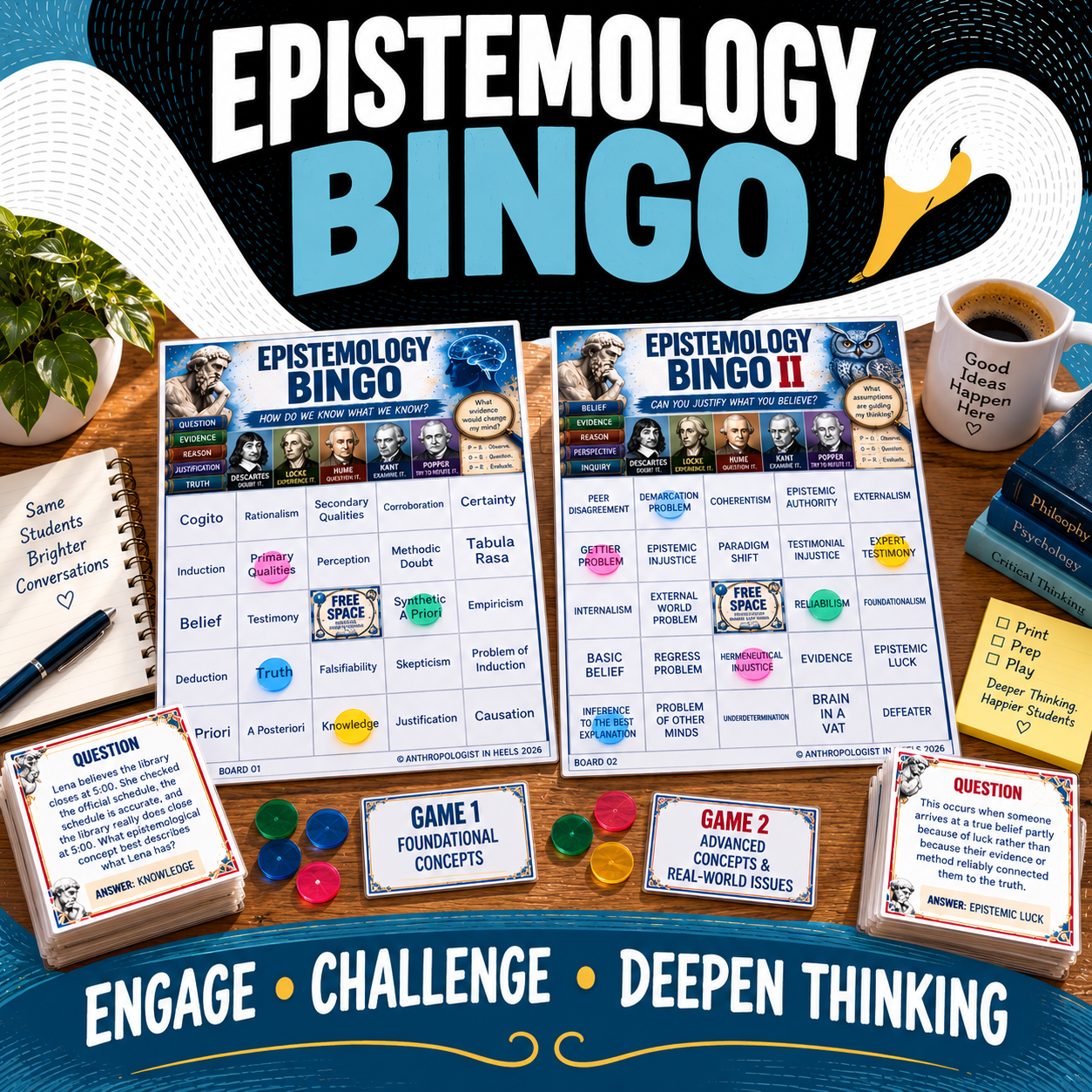 Image 1 of 8
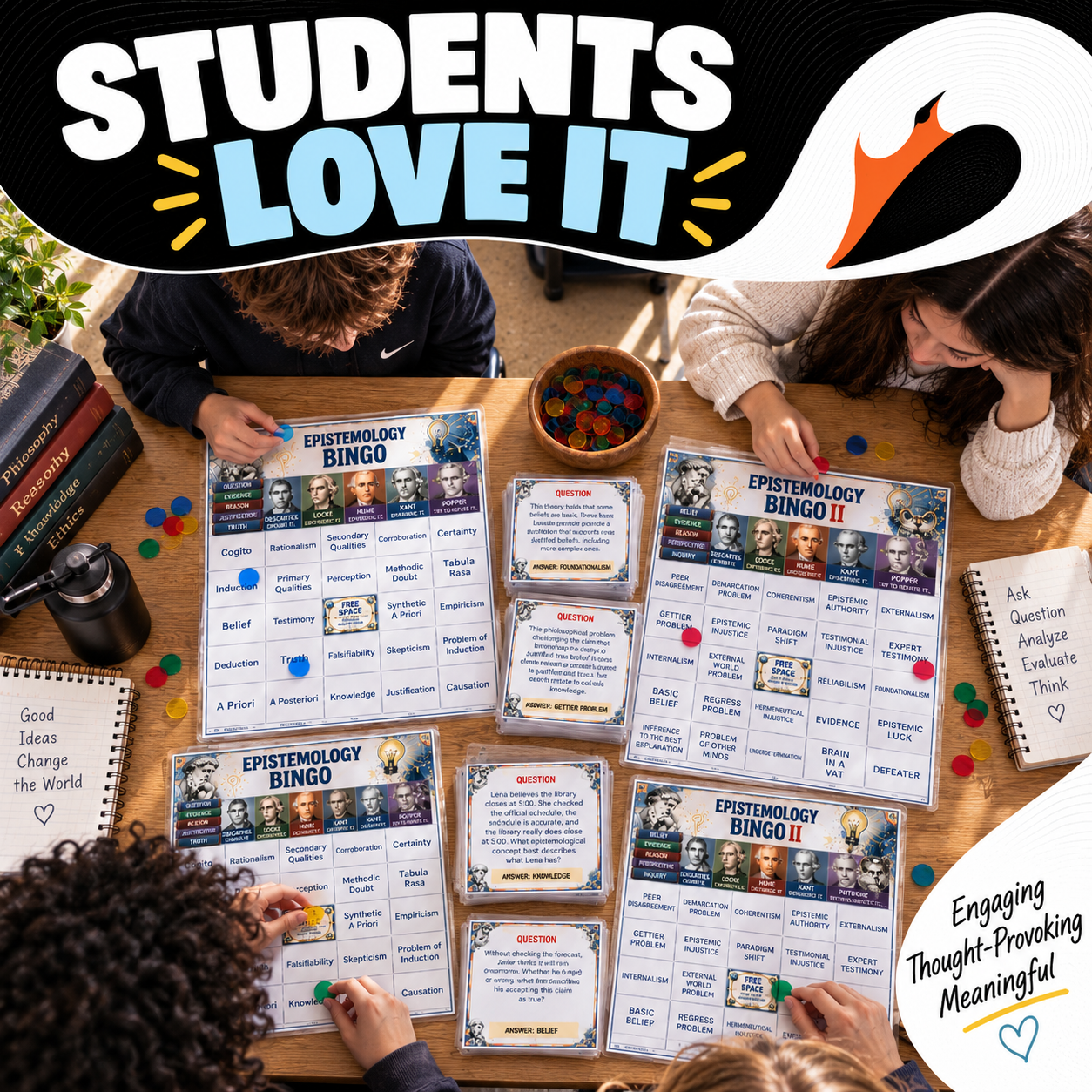 Image 2 of 8
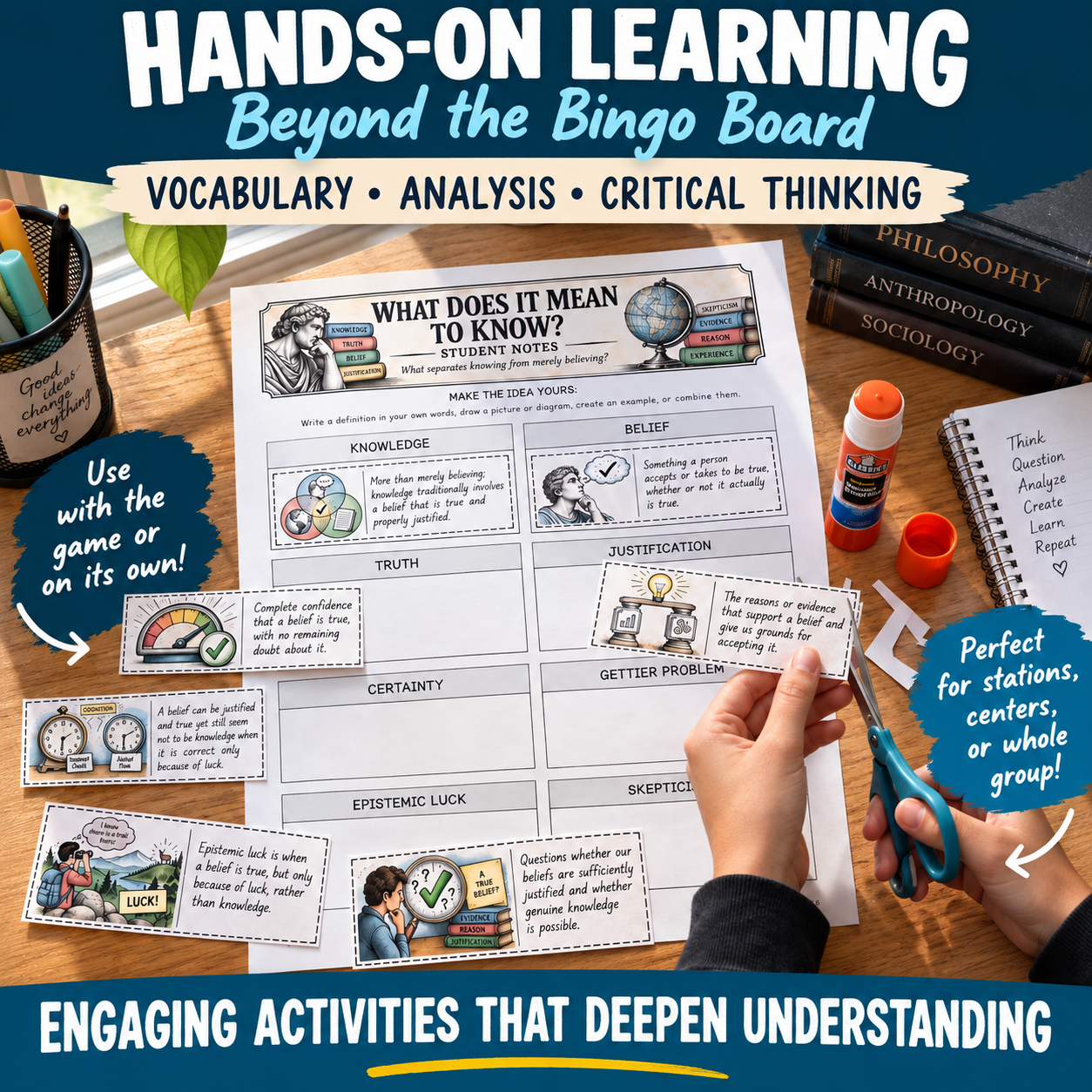 Image 3 of 8
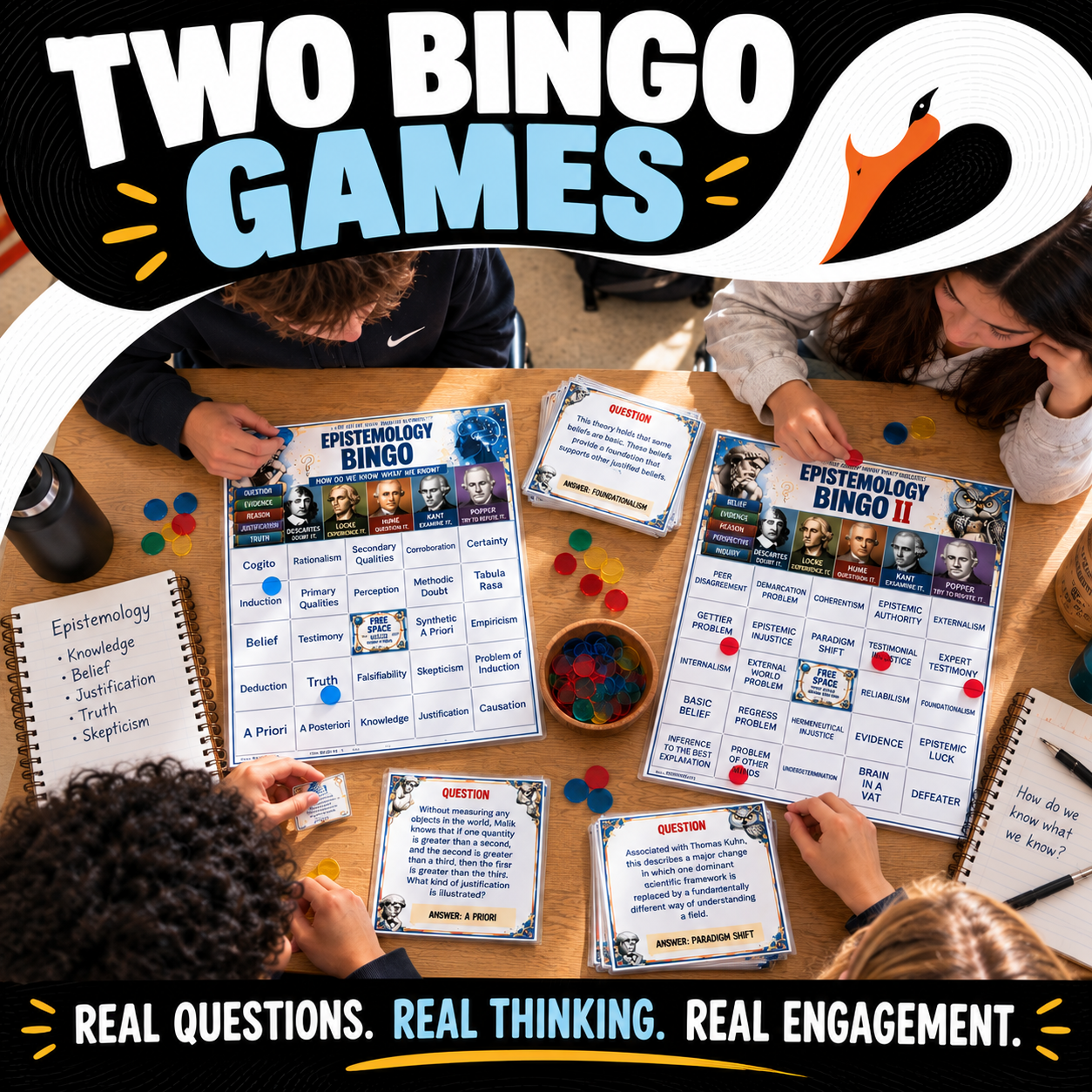 Image 4 of 8
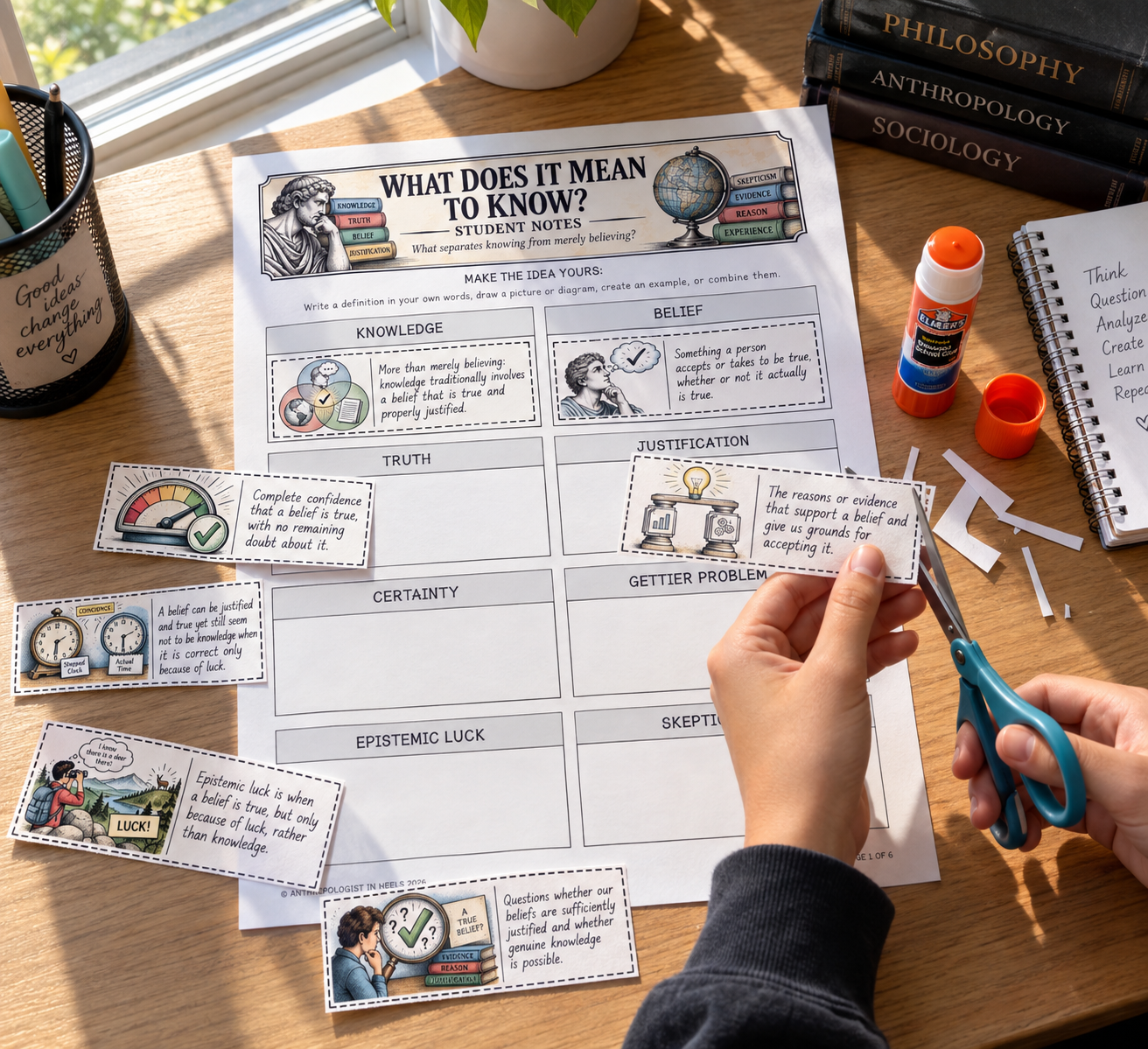 Image 5 of 8
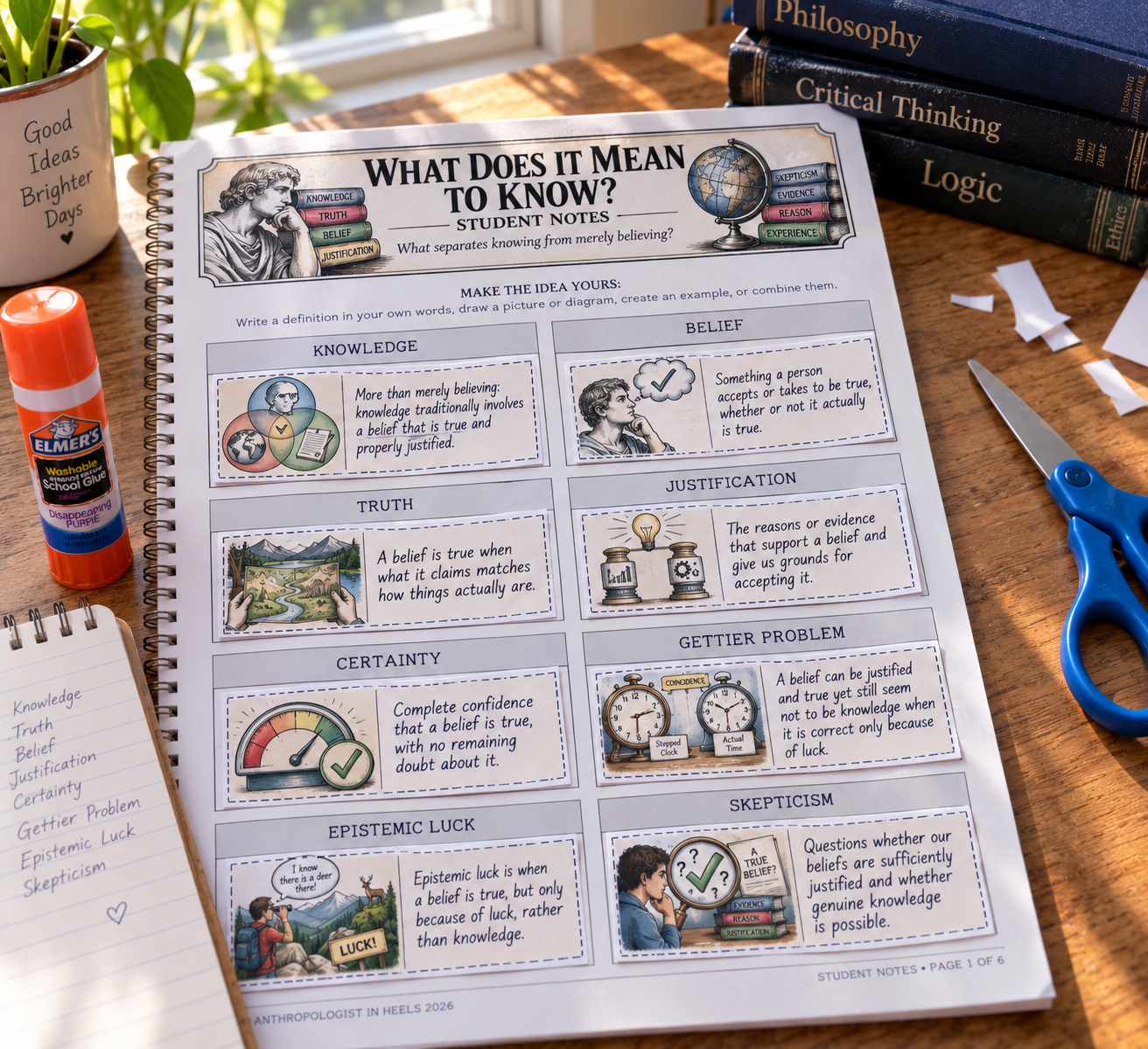 Image 6 of 8
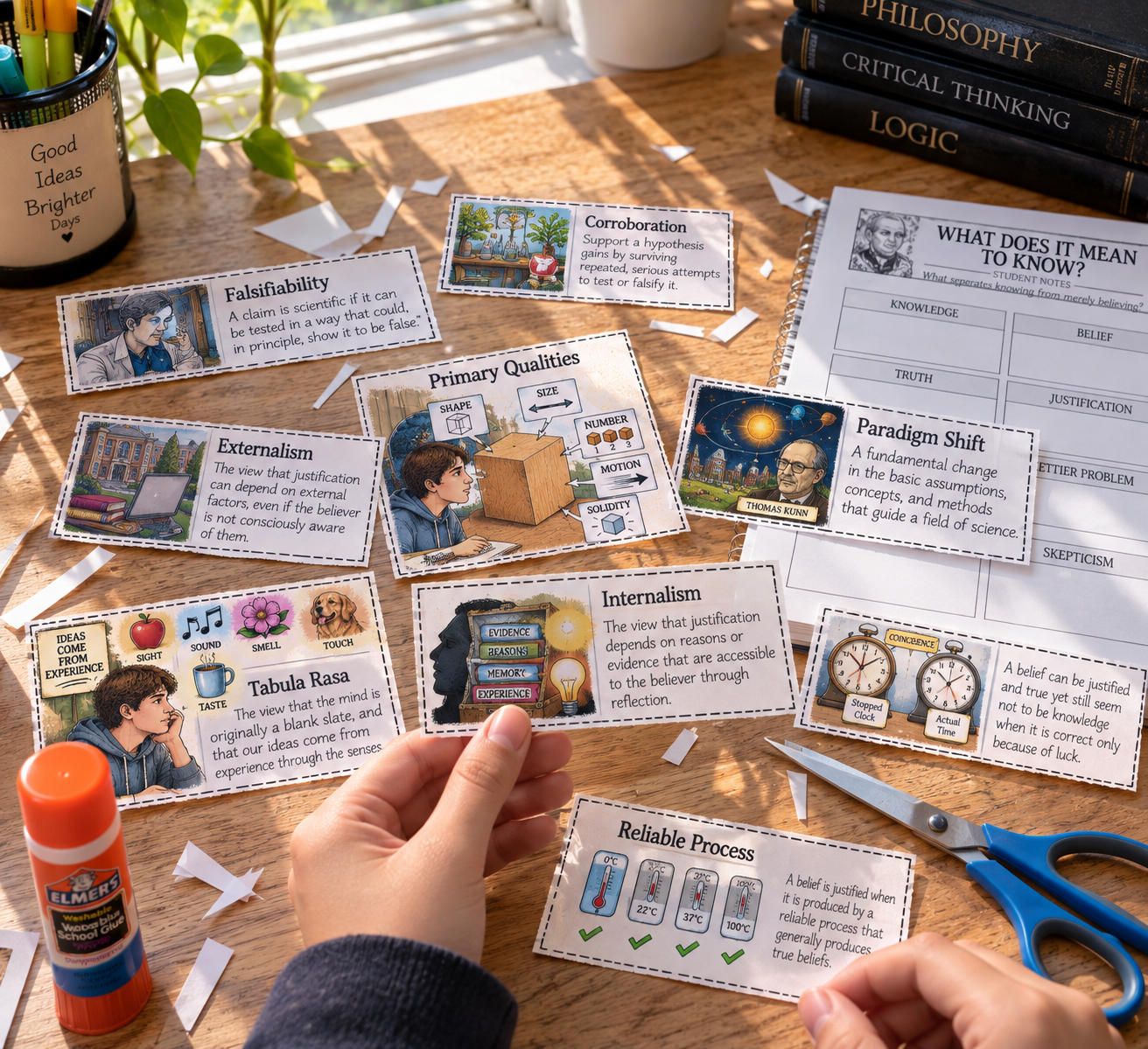 Image 7 of 8
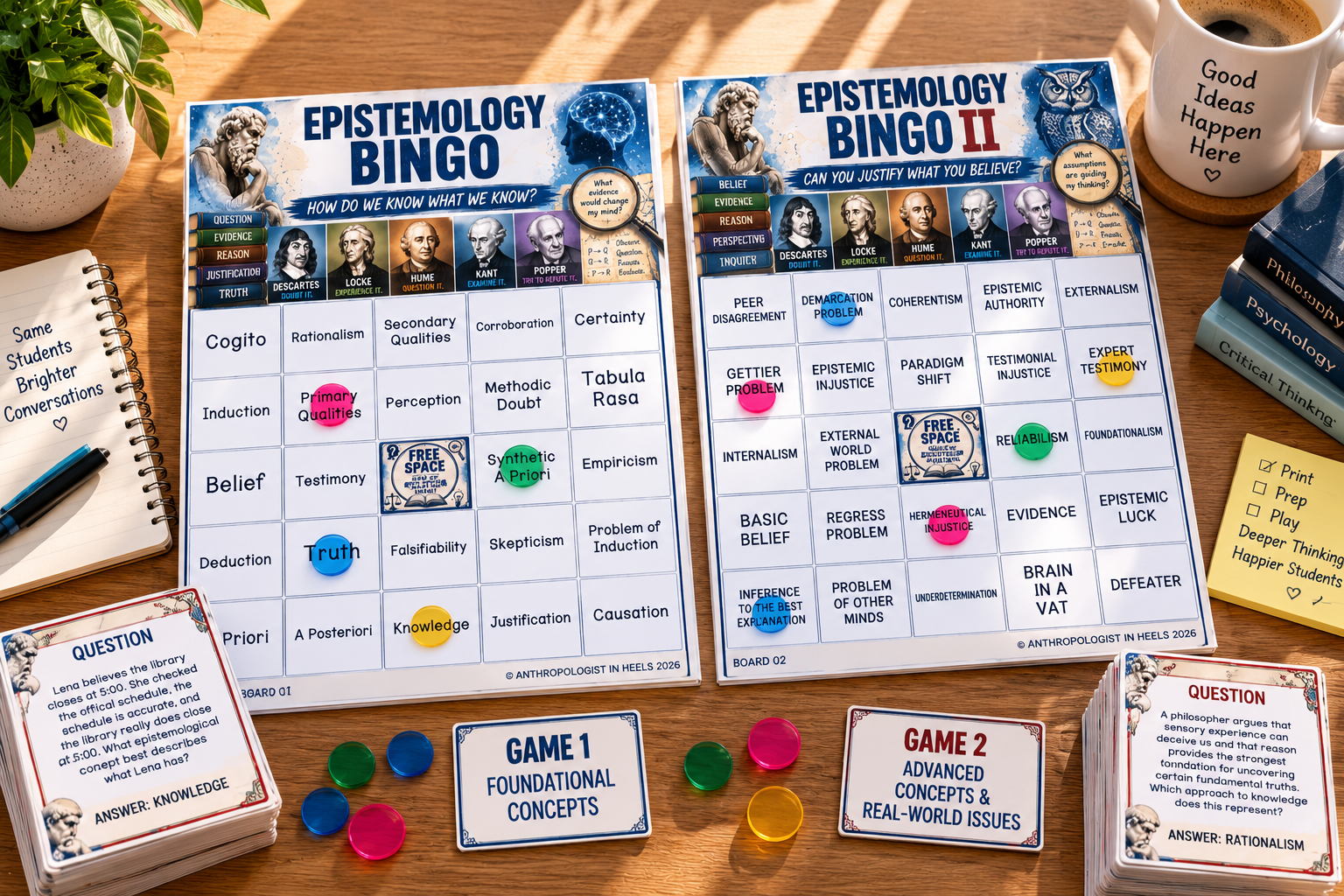 Image 8 of 8