
 Image 1 of 5
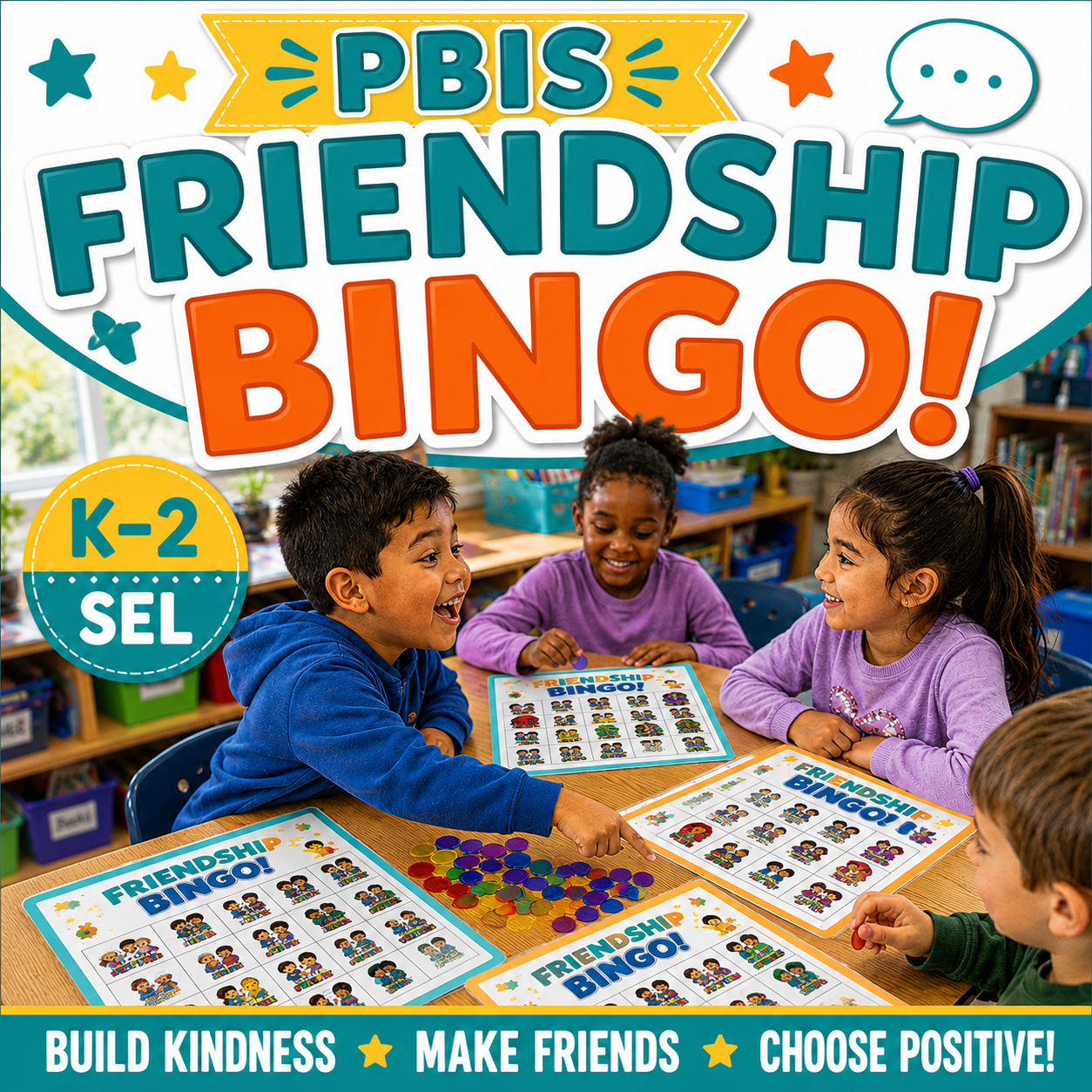 Image 2 of 5
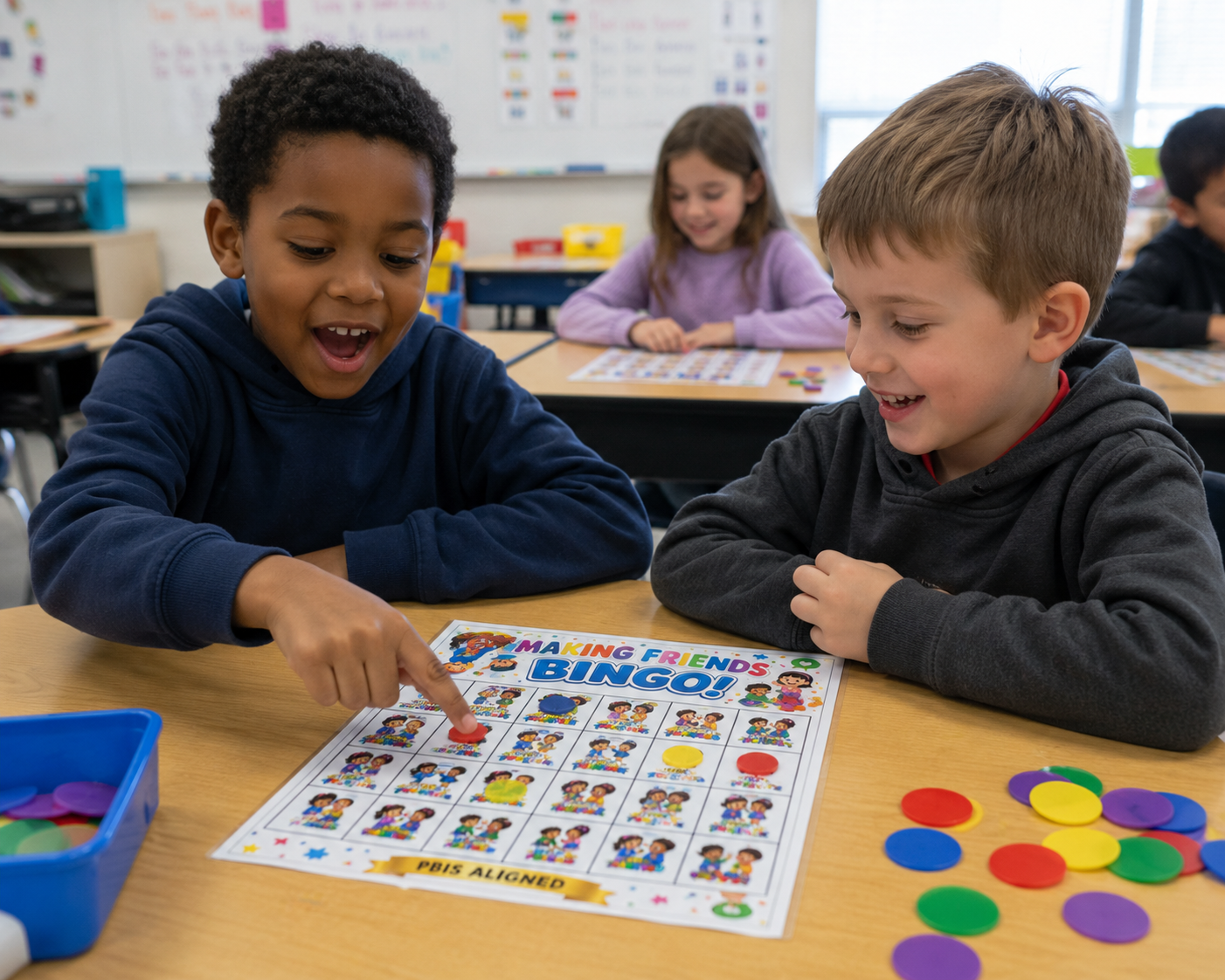 Image 3 of 5
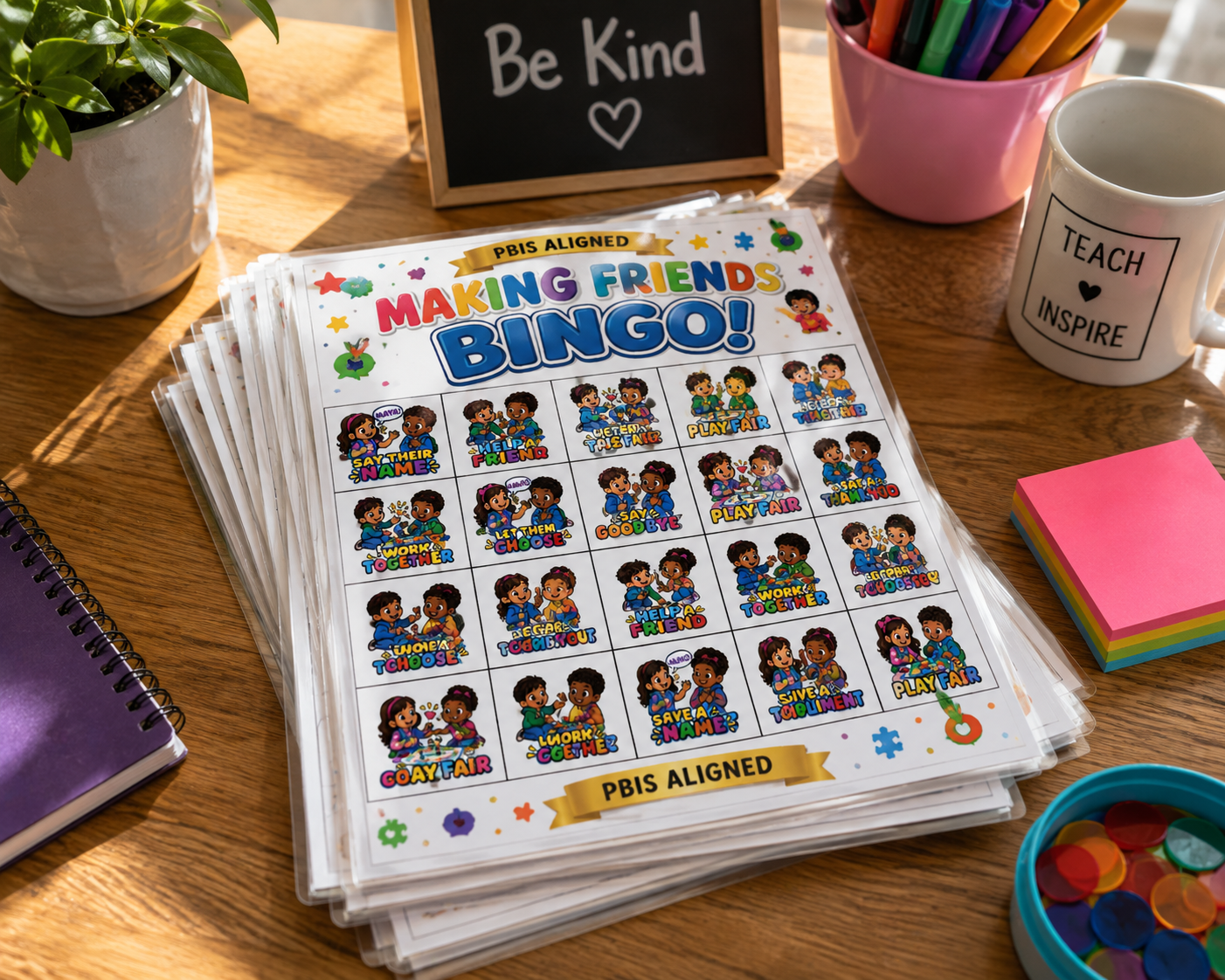 Image 4 of 5
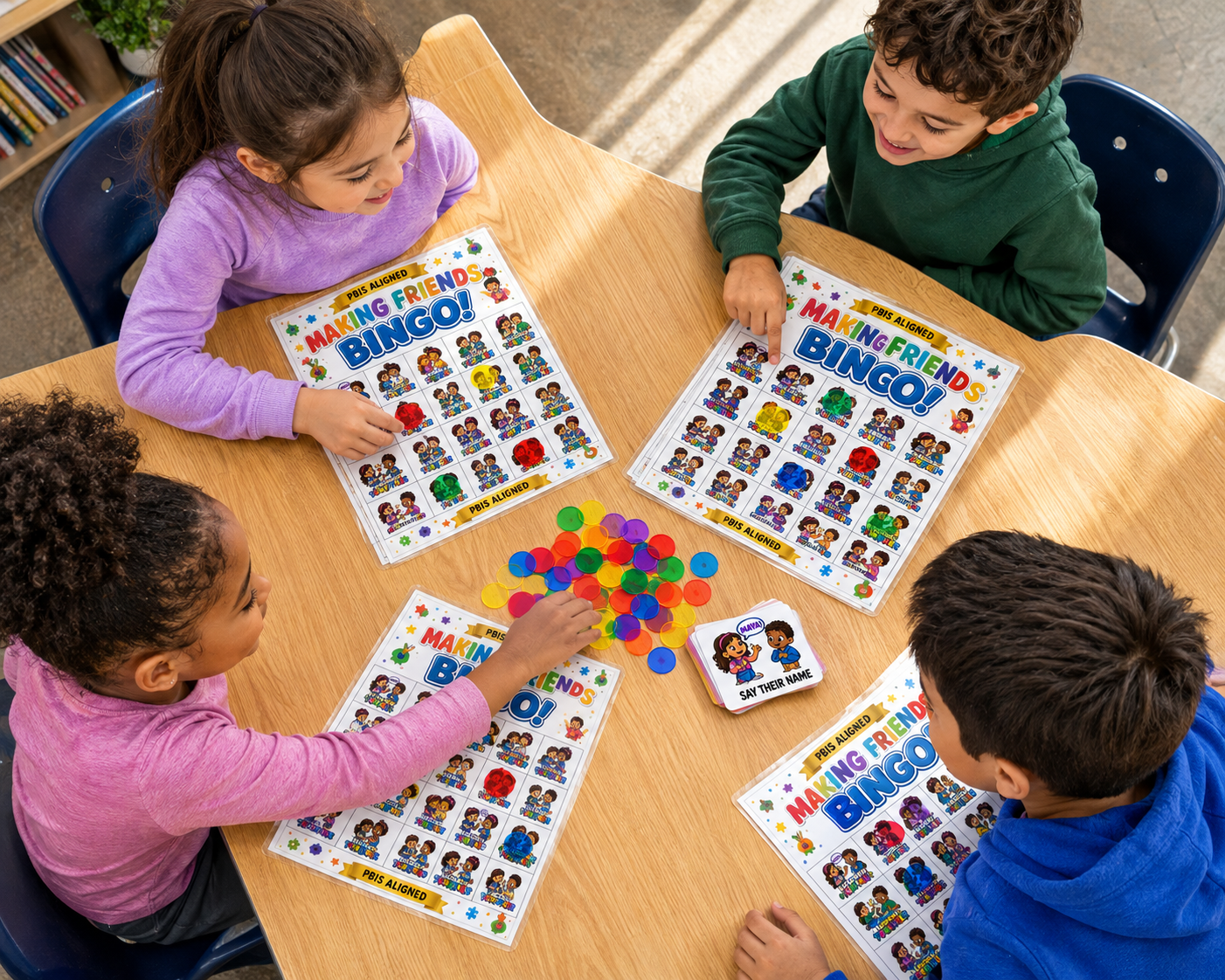 Image 5 of 5
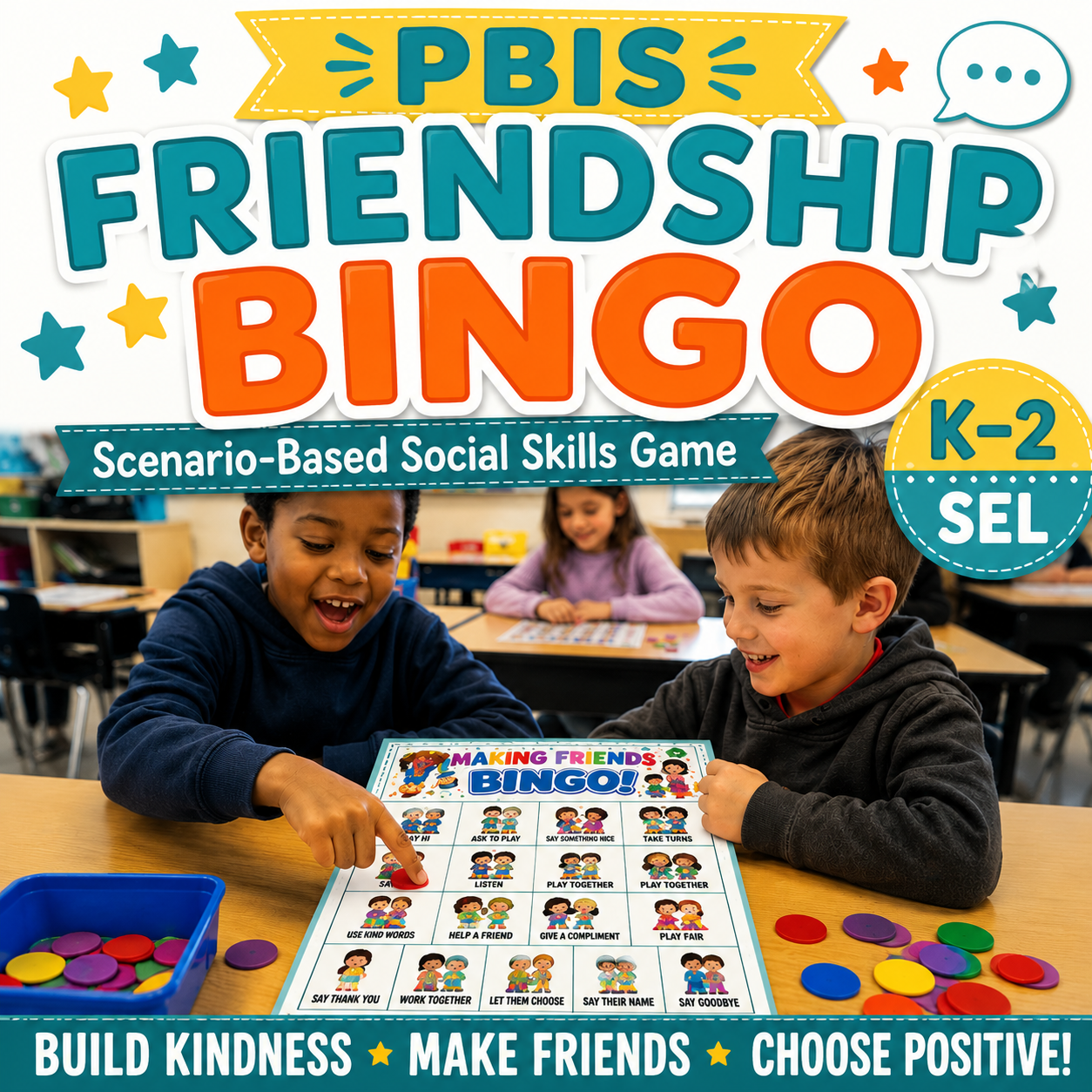
Help young students learn how to make friends, be a good friend, and make positive social choices with this colorful, scenario-based Friendship Bingo Game for Kindergarten, 1st Grade, and 2nd Grade!
This is more than a traditional Bingo game. Instead of simply hearing a friendship word and finding the matching square, students listen to a realistic social situation, decide what a good friend could do, and then find the correct friendship skill on their Bingo board.
🌈 16 FRIENDSHIP & SOCIAL SKILLS
Students practice recognizing and applying:
• Say Hi
• Ask to Play
• Say Something Nice
• Take Turns
• Share
• Use Kind Words
• Listen
• Play Together
• Help a Friend
• Give a Compliment
• Play Fair
• Say Thank You
• Work Together
• Let Them Choose
• Say Their Name
• Say Goodbye
Each friendship skill is paired with bright, child-friendly visual support on the Bingo boards, making the activity accessible and engaging for young learners.
⭐ WHAT'S INCLUDED?
✔ 30 unique 4×4 Friendship Bingo boards
✔ 16 scenario-based friendship calling cards
✔ Colorful visual representations of all 16 friendship skills
✔ Correct answers included on the teacher calling cards
✔ Teacher Guide
✔ Detailed game directions
✔ Classroom implementation suggestions
✔ K–2 differentiation ideas
✔ Small-group and whole-class suggestions
✔ SEL & PBIS Alignment Guide
✔ Terms of Use
✔ Print-and-play format
With 30 different Bingo boards, this activity works well for an entire elementary classroom as well as small social-skills groups.
🎯 HOW TO PLAY
Give each student a Friendship Bingo board and Bingo markers.
The teacher selects a scenario calling card and reads the situation aloud without revealing the answer.
Students listen to the scenario and decide:
What could a good friend do?
Students identify the friendship skill that best fits the situation, locate it on their board, and cover the square.
The teacher then reveals the answer and can briefly discuss why that friendship behavior would be a positive choice.
Continue until a student completes your chosen Bingo pattern!
Play:
4 in a Row • Four Corners • Full Board
or create your own classroom Bingo pattern.
🧠 BUILD REAL SOCIAL-EMOTIONAL SKILLS THROUGH PLAY
Young children are frequently told to “be a good friend.”
But what does being a good friend actually look like?
Friendship Bingo breaks that big idea into 16 concrete, understandable behaviors children can recognize and practice.
Students explore situations involving:
• joining play
• greeting others
• sharing
• taking turns
• listening
• cooperating
• helping friends
• using kind language
• giving compliments
• playing fairly
• showing appreciation
• making choices together
• working as a team
• ending social interactions appropriately
The scenario format gives students an opportunity to think about how these skills apply to real peer interactions, rather than simply memorizing friendship vocabulary.
💬 TURN BINGO INTO AN SEL DISCUSSION
Each calling card can also become a quick social-emotional learning discussion.
After students choose their answer, ask:
“Why is that a good choice?”
“How might the other person feel?”
“What could you say?”
“What might that look like?”
“Can you think of another kind choice?”
These quick conversations can help students connect the Bingo scenarios with situations they experience at school, on the playground, during centers, and while working with classmates.
👩🏫 DIFFERENTIATED FOR K–2
KINDERGARTEN
Read the scenarios slowly and use the colorful Bingo illustrations as visual supports. Discuss the correct friendship behavior together.
1ST GRADE
Have students independently choose the friendship skill before revealing and discussing the answer.
2ND GRADE
Ask students to explain why they selected the skill, describe what the behavior might look or sound like, or suggest another positive response.
One game can therefore support different levels of social-emotional learning across the early elementary grades.
❤️ PERFECT FOR
• Kindergarten social skills
• 1st Grade SEL
• 2nd Grade SEL
• Friendship lessons
• Making friends activities
• Social-emotional learning
• PBIS instruction
• School counseling
• Social skills groups
• Morning Meeting
• Classroom community building
• Beginning-of-year activities
• Friendship groups
• Small-group intervention
• Special education
• Behavior reteaching
• Classroom guidance lessons
• Indoor recess with a learning purpose
🌟 SUPPORTS SEL & PBIS-ALIGNED INSTRUCTION
Friendship Bingo supports instruction and discussion around positive social behaviors including communication, cooperation, listening, kindness, inclusion, appreciation, responsible choices, and positive peer relationships.
The game can complement SEL lessons and PBIS-aligned classroom practices by giving teachers a fun way to explicitly teach, recognize, discuss, and reinforce positive behaviors.
WHY TEACHERS WILL LOVE IT
✔ 30 boards for easy whole-class play
✔ Scenario-based instead of simple vocabulary calling
✔ Visual supports designed for young learners
✔ Low-prep and easy to teach
✔ Works for whole-class or small-group instruction
✔ Encourages discussion and reasoning
✔ Reinforces practical, everyday friendship behaviors
✔ Can be replayed throughout the school year
✔ Combines an engaging classroom game with meaningful social-skills practice
HELP CHILDREN ANSWER AN IMPORTANT QUESTION:“WHAT WOULD A GOOD FRIEND DO?”
Help young students learn how to make friends, be a good friend, and make positive social choices with this colorful, scenario-based Friendship Bingo Game for Kindergarten, 1st Grade, and 2nd Grade!
This is more than a traditional Bingo game. Instead of simply hearing a friendship word and finding the matching square, students listen to a realistic social situation, decide what a good friend could do, and then find the correct friendship skill on their Bingo board.
🌈 16 FRIENDSHIP & SOCIAL SKILLS
Students practice recognizing and applying:
• Say Hi
• Ask to Play
• Say Something Nice
• Take Turns
• Share
• Use Kind Words
• Listen
• Play Together
• Help a Friend
• Give a Compliment
• Play Fair
• Say Thank You
• Work Together
• Let Them Choose
• Say Their Name
• Say Goodbye
Each friendship skill is paired with bright, child-friendly visual support on the Bingo boards, making the activity accessible and engaging for young learners.
⭐ WHAT'S INCLUDED?
✔ 30 unique 4×4 Friendship Bingo boards
✔ 16 scenario-based friendship calling cards
✔ Colorful visual representations of all 16 friendship skills
✔ Correct answers included on the teacher calling cards
✔ Teacher Guide
✔ Detailed game directions
✔ Classroom implementation suggestions
✔ K–2 differentiation ideas
✔ Small-group and whole-class suggestions
✔ SEL & PBIS Alignment Guide
✔ Terms of Use
✔ Print-and-play format
With 30 different Bingo boards, this activity works well for an entire elementary classroom as well as small social-skills groups.
🎯 HOW TO PLAY
Give each student a Friendship Bingo board and Bingo markers.
The teacher selects a scenario calling card and reads the situation aloud without revealing the answer.
Students listen to the scenario and decide:
What could a good friend do?
Students identify the friendship skill that best fits the situation, locate it on their board, and cover the square.
The teacher then reveals the answer and can briefly discuss why that friendship behavior would be a positive choice.
Continue until a student completes your chosen Bingo pattern!
Play:
4 in a Row • Four Corners • Full Board
or create your own classroom Bingo pattern.
🧠 BUILD REAL SOCIAL-EMOTIONAL SKILLS THROUGH PLAY
Young children are frequently told to “be a good friend.”
But what does being a good friend actually look like?
Friendship Bingo breaks that big idea into 16 concrete, understandable behaviors children can recognize and practice.
Students explore situations involving:
• joining play
• greeting others
• sharing
• taking turns
• listening
• cooperating
• helping friends
• using kind language
• giving compliments
• playing fairly
• showing appreciation
• making choices together
• working as a team
• ending social interactions appropriately
The scenario format gives students an opportunity to think about how these skills apply to real peer interactions, rather than simply memorizing friendship vocabulary.
💬 TURN BINGO INTO AN SEL DISCUSSION
Each calling card can also become a quick social-emotional learning discussion.
After students choose their answer, ask:
“Why is that a good choice?”
“How might the other person feel?”
“What could you say?”
“What might that look like?”
“Can you think of another kind choice?”
These quick conversations can help students connect the Bingo scenarios with situations they experience at school, on the playground, during centers, and while working with classmates.
👩🏫 DIFFERENTIATED FOR K–2
KINDERGARTEN
Read the scenarios slowly and use the colorful Bingo illustrations as visual supports. Discuss the correct friendship behavior together.
1ST GRADE
Have students independently choose the friendship skill before revealing and discussing the answer.
2ND GRADE
Ask students to explain why they selected the skill, describe what the behavior might look or sound like, or suggest another positive response.
One game can therefore support different levels of social-emotional learning across the early elementary grades.
❤️ PERFECT FOR
• Kindergarten social skills
• 1st Grade SEL
• 2nd Grade SEL
• Friendship lessons
• Making friends activities
• Social-emotional learning
• PBIS instruction
• School counseling
• Social skills groups
• Morning Meeting
• Classroom community building
• Beginning-of-year activities
• Friendship groups
• Small-group intervention
• Special education
• Behavior reteaching
• Classroom guidance lessons
• Indoor recess with a learning purpose
🌟 SUPPORTS SEL & PBIS-ALIGNED INSTRUCTION
Friendship Bingo supports instruction and discussion around positive social behaviors including communication, cooperation, listening, kindness, inclusion, appreciation, responsible choices, and positive peer relationships.
The game can complement SEL lessons and PBIS-aligned classroom practices by giving teachers a fun way to explicitly teach, recognize, discuss, and reinforce positive behaviors.
WHY TEACHERS WILL LOVE IT
✔ 30 boards for easy whole-class play
✔ Scenario-based instead of simple vocabulary calling
✔ Visual supports designed for young learners
✔ Low-prep and easy to teach
✔ Works for whole-class or small-group instruction
✔ Encourages discussion and reasoning
✔ Reinforces practical, everyday friendship behaviors
✔ Can be replayed throughout the school year
✔ Combines an engaging classroom game with meaningful social-skills practice
HELP CHILDREN ANSWER AN IMPORTANT QUESTION:“WHAT WOULD A GOOD FRIEND DO?”