
 Image 1 of 4
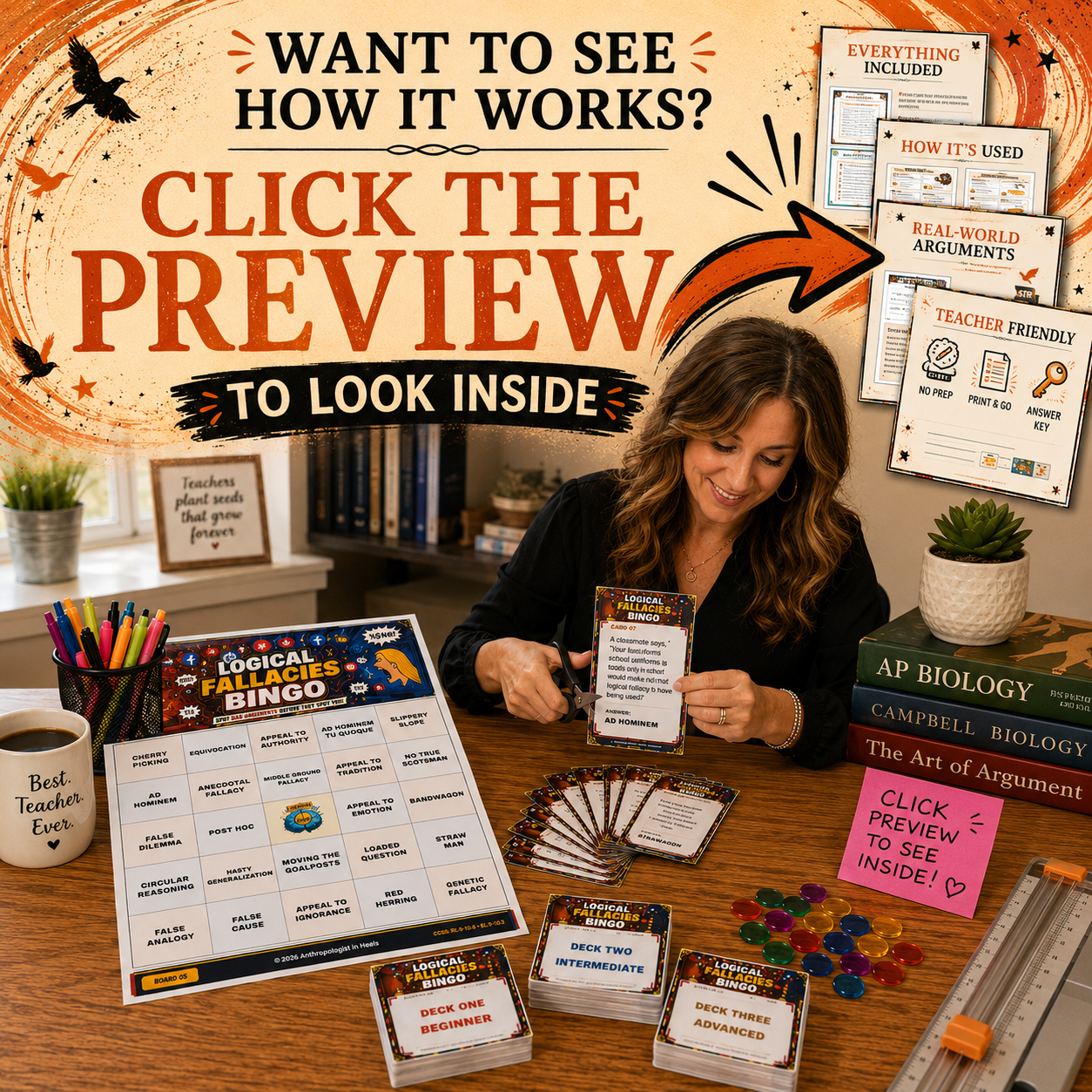 Image 2 of 4
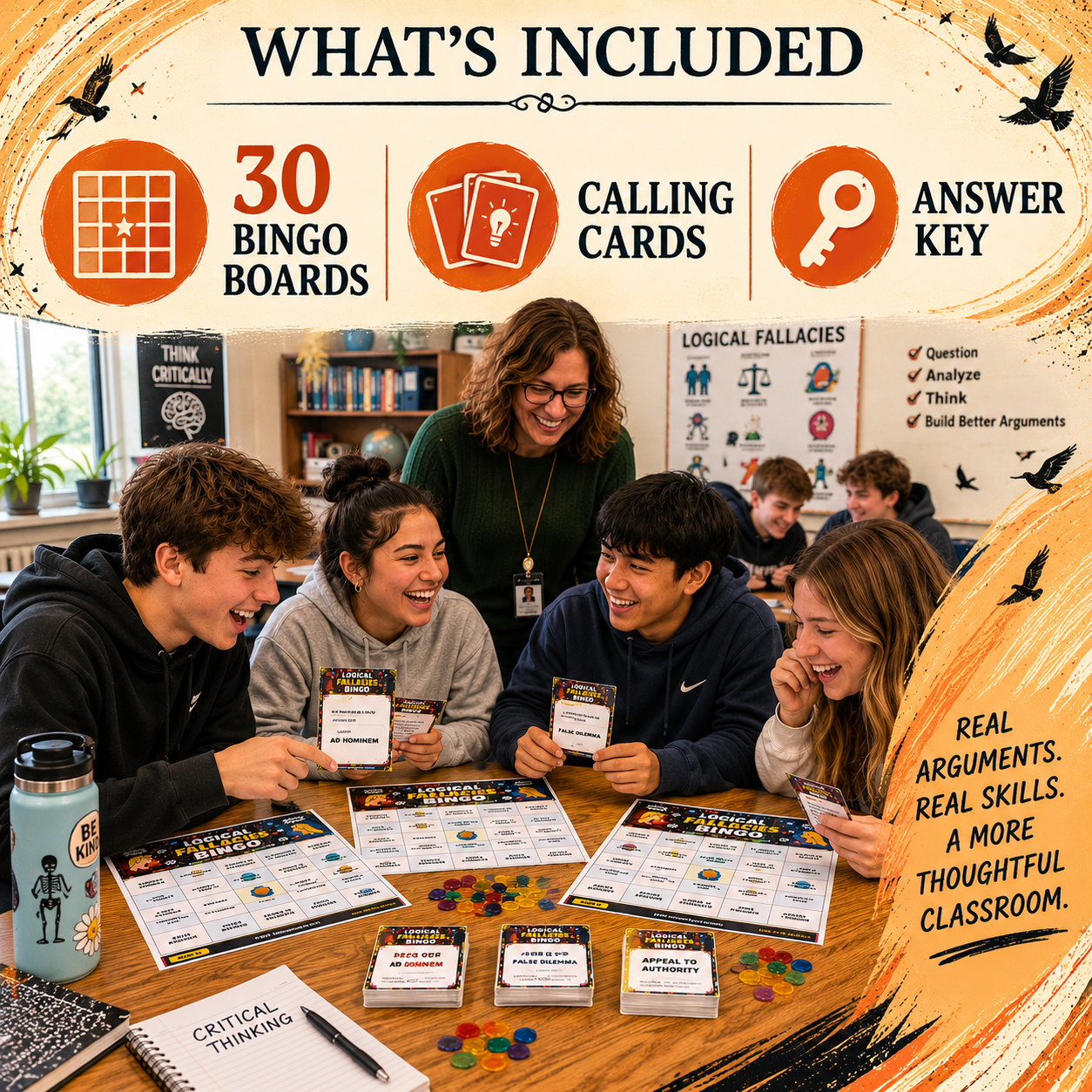 Image 3 of 4
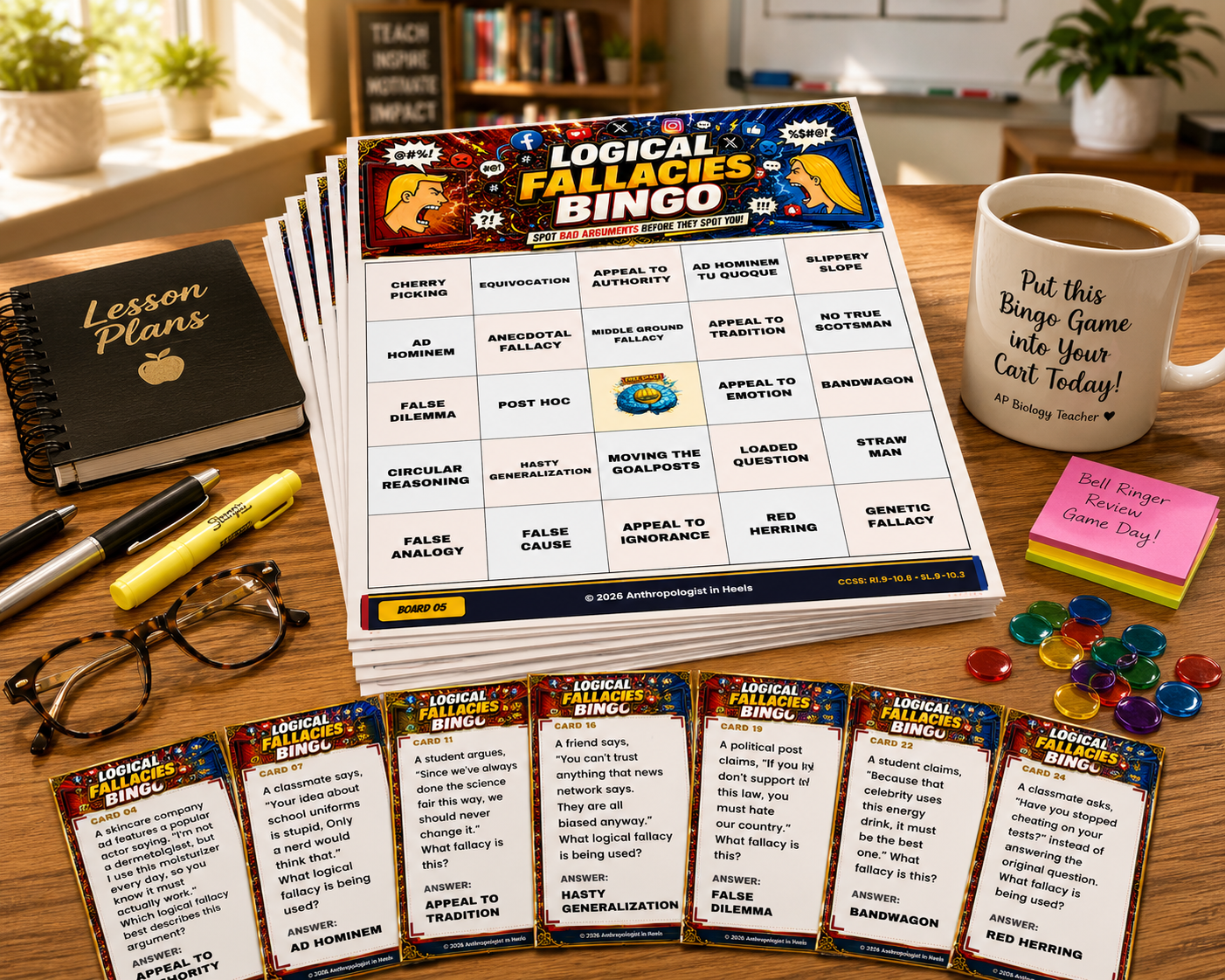 Image 4 of 4
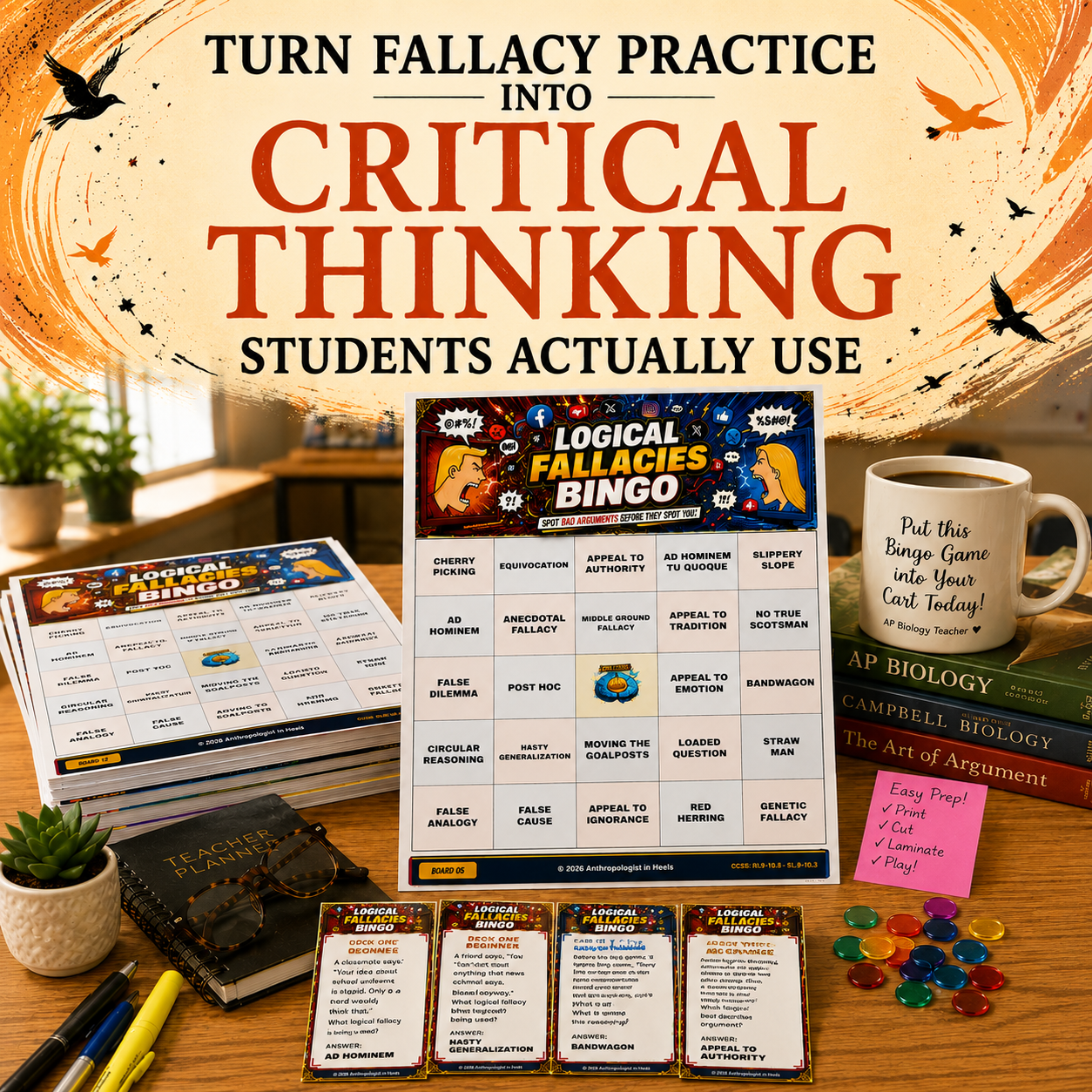
Make ELA argument and critical thinking practice engaging with this Logical Fallacies Activity & Bingo Game designed to help students recognize, analyze, and explain flawed reasoning! This is a must have activity for your high school students.
✅ What’s Included
30 different Logical Fallacies Bingo boards
24 common logical fallacies featured on the boards
Informational text introducing and explaining the fallacies
Real-world examples connected to conversations, social media, advertising, school, and everyday life
“Think Like a Detective” questions to strengthen analysis
Quick checks for identifying, explaining, and repairing flawed reasoning
Teacher calling cards with student-friendly scenarios
Answers and explanations directly on the teacher calling cards
Free space on each bingo board
Students work with fallacies including Ad Hominem, Straw Man, Bandwagon, Appeal to Authority, Appeal to Emotion, False Dilemma, Genetic Fallacy, Appeal to Tradition, Equivocation, Appeal to Ignorance, Post Hoc, Moving the Goalposts, Circular Reasoning, False Analogy, Anecdotal Fallacy, Slippery Slope, Red Herring, Cherry Picking, and more.
🎯 How It Works in the Classroom
Start with the included informational text to introduce or review common logical fallacies. Each fallacy is presented as a “case file” with an explanation, flawed reasoning example, real-world applications, analysis questions, and a quick check.
Then hand out the Logical Fallacies Bingo boards. Read a calling card aloud while students analyze the scenario and determine which fallacy is being used. Students locate the corresponding fallacy on their boards and mark the space.
Use this activity for:
Whole-class review
ELA argument and rhetoric units
Speech and debate classes
Critical thinking lessons
Media literacy instruction
Test review
Friday activities
Before-break lessons
Enrichment or extension activities
📚 Standards & Learning Goals
This high school logical fallacies activity supports:
CCSS RI.9-10.8 — Delineate and evaluate arguments and specific claims, assessing whether reasoning is valid and evidence is relevant and sufficient.
CCSS SL.9-10.3 — Evaluate a speaker’s point of view, reasoning, and use of evidence and rhetoric.
Students practice how to:
Recognize common logical fallacies
Analyze flawed arguments
Distinguish evidence from faulty reasoning
Explain why an argument is logically weak
Evaluate reasoning in real-world contexts
Think more critically about persuasive messages
⭐ Why Teachers Will Love It
Less prep, more thinking. The informational text gives students background knowledge before they play, while the calling cards provide ready-made scenarios and explanations.
Relevant examples. Students encounter flawed reasoning through school situations, advertising, conversations, social media, and other familiar contexts.
More than memorization. Students aren't simply matching definitions. They must listen to an argument, analyze the reasoning, and determine which logical fallacy is present.
Built for a full class. With 30 different bingo boards, this activity makes whole-class logical fallacies review easy to organize.
✨ Make Logical Fallacies Practice Something Students Want to Do
Turn argument analysis into an interactive classroom game while helping students become more thoughtful readers, listeners, and consumers of information.
Download this Logical Fallacies Bingo Game for high school and bring critical thinking, argument analysis, and media literacy together in one engaging activity!
─────────────────
┊ ┊ ┊⋆。 ┊ ┊ ┊ ┊
┊ ⋆。 ┊ ┊ ┊ ┊⋆。┊ ༊*·˚
┊ ┊ ┊ ┊ ┊ ┊
┊ ‧₊ ༉ ┊ ˚✩ ┊ ๑՞.
┊ ₊˚.༄ ┊
✩₊̣̇. ੈ♡˳
✧.*ೃ༄
Thanks for visiting! Follow the store to see new products as they’re released 💛
Make ELA argument and critical thinking practice engaging with this Logical Fallacies Activity & Bingo Game designed to help students recognize, analyze, and explain flawed reasoning! This is a must have activity for your high school students.
✅ What’s Included
30 different Logical Fallacies Bingo boards
24 common logical fallacies featured on the boards
Informational text introducing and explaining the fallacies
Real-world examples connected to conversations, social media, advertising, school, and everyday life
“Think Like a Detective” questions to strengthen analysis
Quick checks for identifying, explaining, and repairing flawed reasoning
Teacher calling cards with student-friendly scenarios
Answers and explanations directly on the teacher calling cards
Free space on each bingo board
Students work with fallacies including Ad Hominem, Straw Man, Bandwagon, Appeal to Authority, Appeal to Emotion, False Dilemma, Genetic Fallacy, Appeal to Tradition, Equivocation, Appeal to Ignorance, Post Hoc, Moving the Goalposts, Circular Reasoning, False Analogy, Anecdotal Fallacy, Slippery Slope, Red Herring, Cherry Picking, and more.
🎯 How It Works in the Classroom
Start with the included informational text to introduce or review common logical fallacies. Each fallacy is presented as a “case file” with an explanation, flawed reasoning example, real-world applications, analysis questions, and a quick check.
Then hand out the Logical Fallacies Bingo boards. Read a calling card aloud while students analyze the scenario and determine which fallacy is being used. Students locate the corresponding fallacy on their boards and mark the space.
Use this activity for:
Whole-class review
ELA argument and rhetoric units
Speech and debate classes
Critical thinking lessons
Media literacy instruction
Test review
Friday activities
Before-break lessons
Enrichment or extension activities
📚 Standards & Learning Goals
This high school logical fallacies activity supports:
CCSS RI.9-10.8 — Delineate and evaluate arguments and specific claims, assessing whether reasoning is valid and evidence is relevant and sufficient.
CCSS SL.9-10.3 — Evaluate a speaker’s point of view, reasoning, and use of evidence and rhetoric.
Students practice how to:
Recognize common logical fallacies
Analyze flawed arguments
Distinguish evidence from faulty reasoning
Explain why an argument is logically weak
Evaluate reasoning in real-world contexts
Think more critically about persuasive messages
⭐ Why Teachers Will Love It
Less prep, more thinking. The informational text gives students background knowledge before they play, while the calling cards provide ready-made scenarios and explanations.
Relevant examples. Students encounter flawed reasoning through school situations, advertising, conversations, social media, and other familiar contexts.
More than memorization. Students aren't simply matching definitions. They must listen to an argument, analyze the reasoning, and determine which logical fallacy is present.
Built for a full class. With 30 different bingo boards, this activity makes whole-class logical fallacies review easy to organize.
✨ Make Logical Fallacies Practice Something Students Want to Do
Turn argument analysis into an interactive classroom game while helping students become more thoughtful readers, listeners, and consumers of information.
Download this Logical Fallacies Bingo Game for high school and bring critical thinking, argument analysis, and media literacy together in one engaging activity!
─────────────────
┊ ┊ ┊⋆。 ┊ ┊ ┊ ┊
┊ ⋆。 ┊ ┊ ┊ ┊⋆。┊ ༊*·˚
┊ ┊ ┊ ┊ ┊ ┊
┊ ‧₊ ༉ ┊ ˚✩ ┊ ๑՞.
┊ ₊˚.༄ ┊
✩₊̣̇. ੈ♡˳
✧.*ೃ༄
Thanks for visiting! Follow the store to see new products as they’re released 💛