
 Image 1 of 5
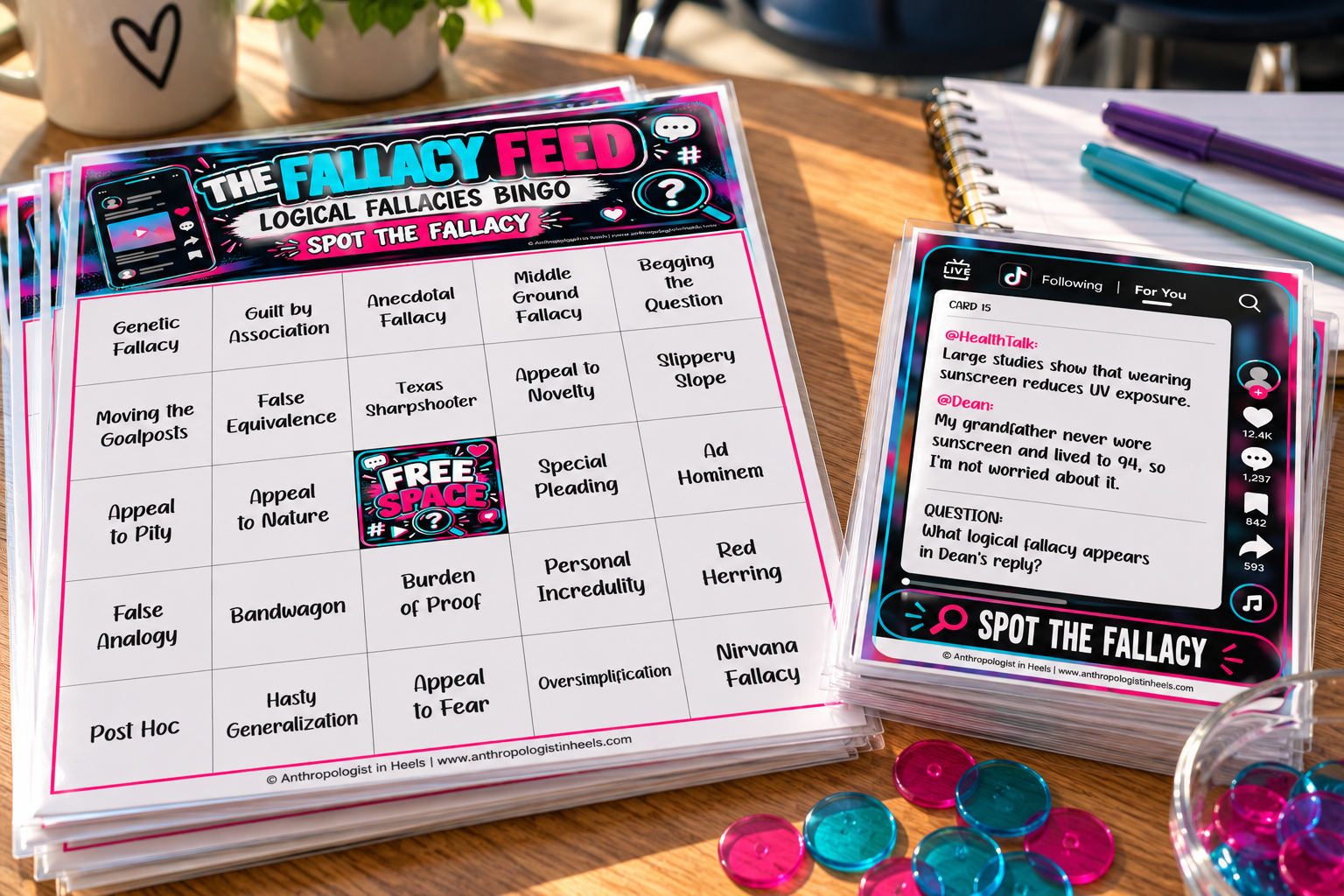 Image 2 of 5
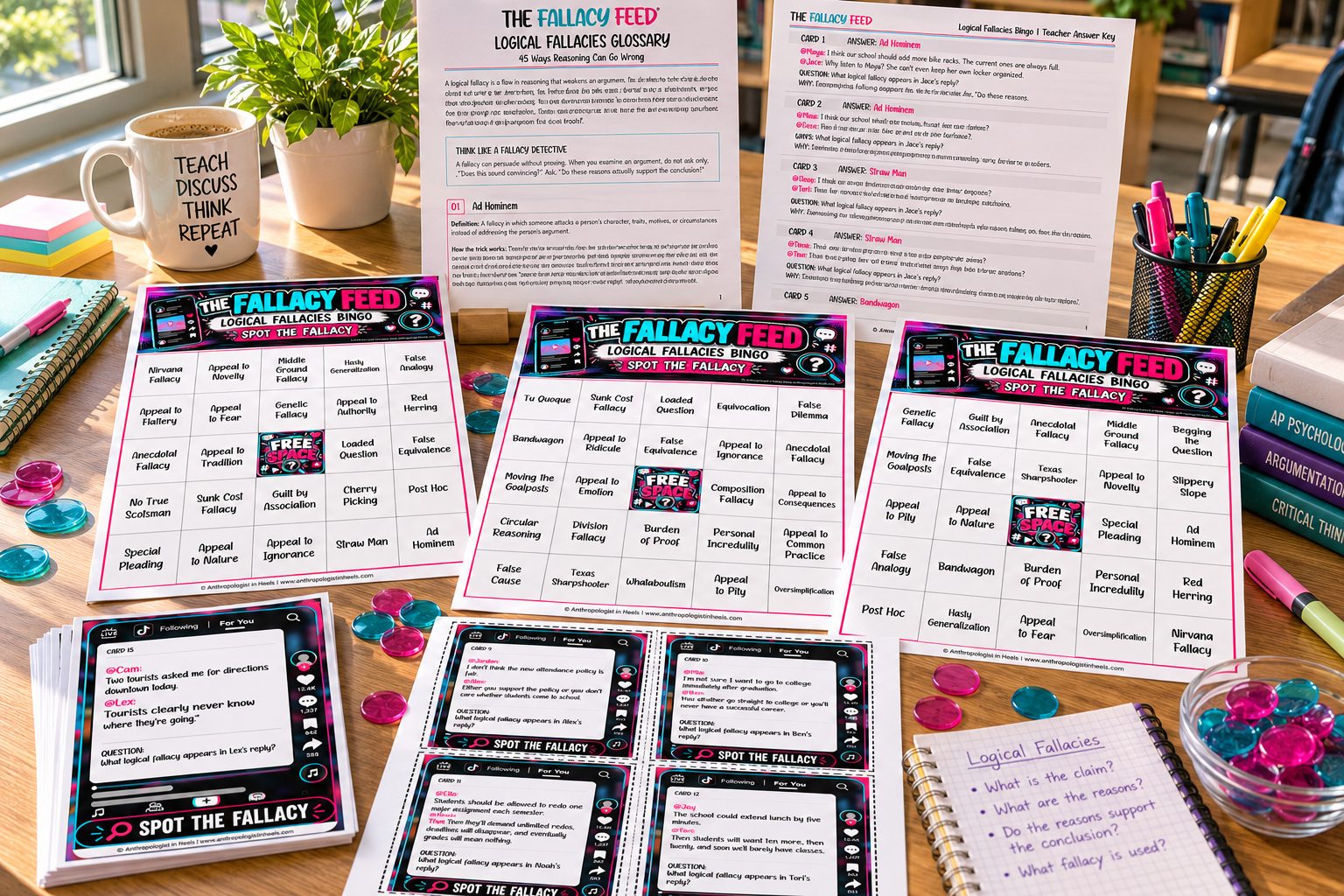 Image 3 of 5
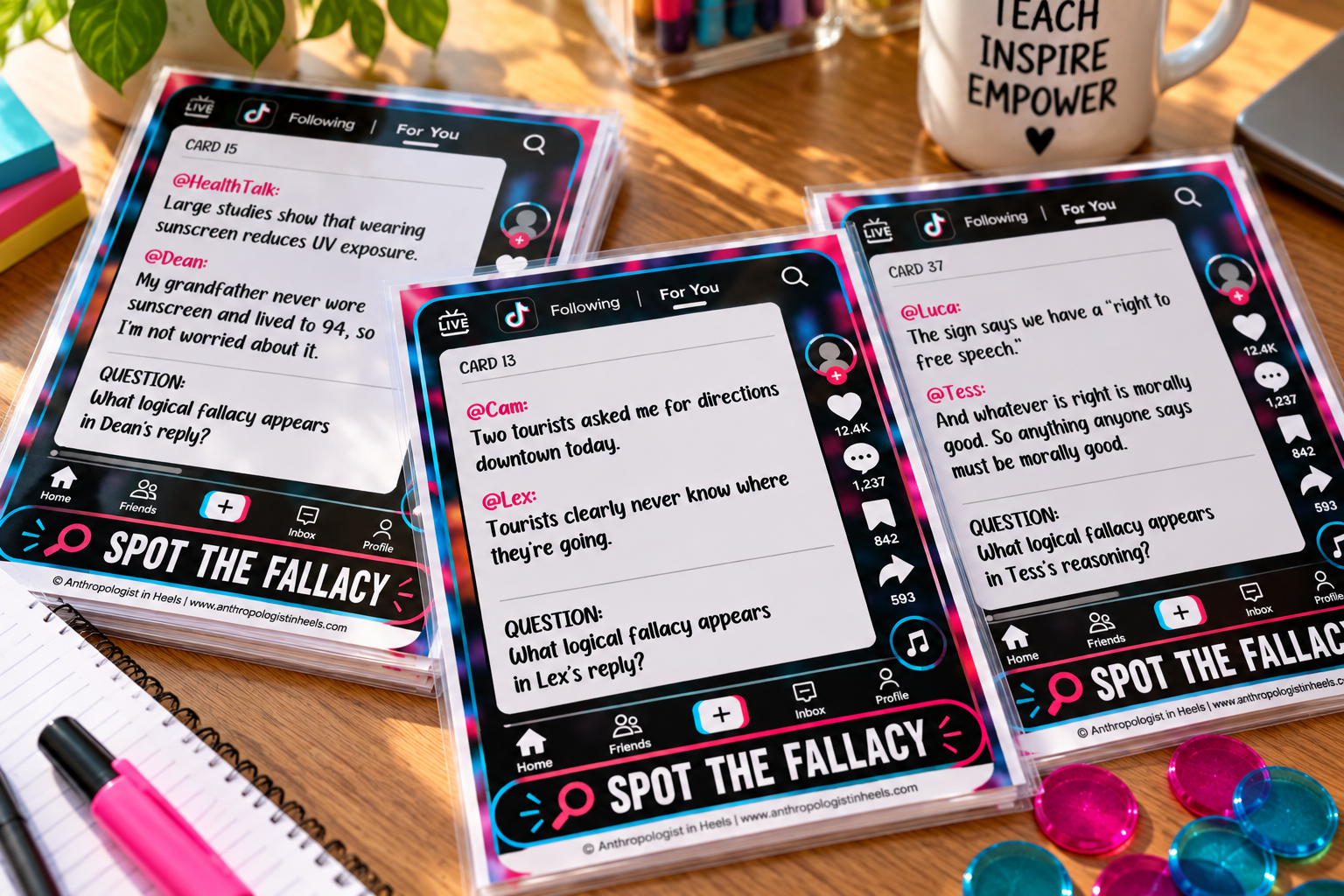 Image 4 of 5
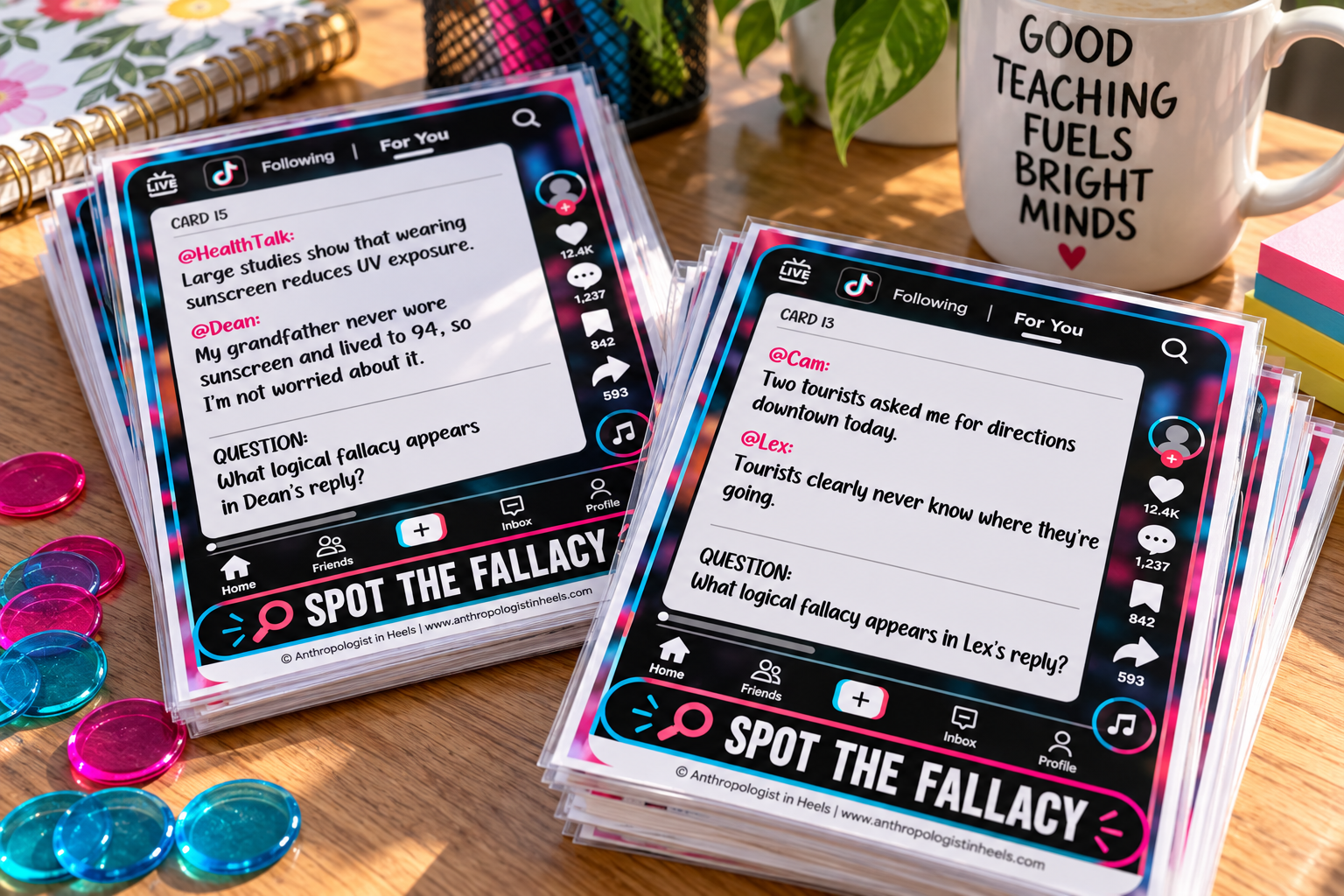 Image 5 of 5
Make logical fallacies, ELA, social media, and critical thinking more engaging with this interactive Logical Fallacies Activity & Bingo Game! Students analyze realistic, social-media-style conversations to identify faulty reasoning and explain why an argument falls apart.
Designed for grades 8–12, this activity moves beyond memorizing definitions. Students practice spotting logical fallacies in the kinds of arguments they actually encounter—in social media posts, advertising, school debates, websites, products, sports, and everyday conversations.
📦 What’s Included
This ready-to-use logical fallacies activity includes:
✅ 30 unique bingo boards with a FREE SPACE
✅ 90 scenario-based calling cards
✅ Engaging social-media-feed-style conversations
✅ Teacher Answer Key with answers and reasoning explanations
✅ 17-page Logical Fallacies Glossary
✅ Coverage of 45 ways reasoning can go wrong
✅ Definitions and explanations for each reasoning error
✅ Print-ready materials for flexible classroom use
Students encounter Ad Hominem, Straw Man, Bandwagon, Red Herring, False Dilemma, Slippery Slope, Hasty Generalization, Appeal to Authority, Appeal to Emotion, Cherry Picking, False Cause, Whataboutism, Equivocation, and many more.
🎯 How It Works in the Classroom
Use this logical fallacies bingo game for whole-class instruction, small groups, stations, review, enrichment, or assessment practice.
Read or display a calling-card scenario. Students analyze the argument and identify the logical fallacy represented on their bingo board.
The learning doesn't stop when students name the fallacy. Students must consider why the reasoning is flawed and whether the evidence actually supports the conclusion.
Perfect for:
⭐ Argumentative writing units
⭐ ELA argument and evidence lessons
⭐ Rhetoric and argument analysis
⭐ Media literacy instruction
⭐ Critical thinking practice
⭐ Debate and philosophy classes
⭐ Psychology and social studies
⭐ Stations, small groups, or whole-class review
🧠 Standards & Learning Goals
This ELA and critical thinking activity gives students meaningful practice analyzing arguments, claims, evidence, and reasoning.
Students practice how to:
Identify common logical fallacies
Analyze flaws in an argument's reasoning
Explain why reasoning is faulty
Evaluate whether evidence supports a conclusion
Recognize emotional and persuasive distractions
Analyze claims encountered on social media
Distinguish between closely related reasoning errors
Students also tackle nuanced distinctions, including Hasty Generalization vs. Anecdotal Fallacy, False Cause vs. Post Hoc, and other related reasoning errors.
Most importantly, students learn that identifying a fallacy does not automatically prove a conclusion is false.
Instead, they learn to ask a better critical-thinking question:
Do the reasons presented actually support the conclusion?
❤️ Why Teachers Will Love It
This resource combines the engagement of a classroom game with meaningful ELA, media literacy, and critical thinking practice.
✨ Realistic scenarios make abstract reasoning errors easier to understand.
✨ 90 calling cards provide repeated opportunities for analysis.
✨ 30 unique bingo boards make whole-class gameplay easy.
✨ 45 reasoning errors provide depth beyond a basic fallacies lesson.
✨ The teacher answer key explains why, rather than simply giving the answer.
✨ The 17-page glossary provides a useful reference for students and teachers.
✨ Social-media-style conversations help students connect classroom learning with arguments they encounter outside school.
Eighty-four (84) Total Pages
Arrives in a ZIP file
Logical Fallacies Activity & Bingo Game | ELA Argument & Critical Thinking
Philosophy of Ethics Bingo | Aristotle Mills Kant Rand | Ethical Reasoning Game
Cognitive Bias Bingo | Cognitive Bias & Implicit Bias Thinking Game Activity
Greek Philosophy Bingo Review Game | Philosophy Review Activity | Ancient Greece
Philosophy of Economics Bingo Game | High School Philosophy Printable Activity
Epistemology Bingo Game | High School Philosophy Activity, Lessons & Notes
High School Philosophy Epistemology Printable Bingo Game Activity
Students aren't just playing bingo. They're practicing how to become more careful consumers of arguments, evidence, media, and information.
📥 Make Argument Analysis More Engaging
Bring The Fallacy Feed into your next ELA, rhetoric, media literacy, or critical thinking lesson!
This Logical Fallacies Activity & Bingo Game gives students an engaging way to practice spotting faulty reasoning while building skills they can use when evaluating arguments both inside and outside the classroom.
─────────────────
┊ ┊ ┊⋆。 ┊ ┊ ┊ ┊
┊ ⋆。 ┊ ┊ ┊ ┊⋆。┊ ༊*·˚
┊ ┊ ┊ ┊ ┊ ┊
┊ ‧₊ ༉ ┊ ˚✩ ┊ ๑՞.
┊ ₊˚.༄ ┊
✩₊̣̇. ੈ♡˳
✧.*ೃ༄
Thanks for visiting! Follow the store to see new products as they’re released 💛
🌹🌹
Make logical fallacies, ELA, social media, and critical thinking more engaging with this interactive Logical Fallacies Activity & Bingo Game! Students analyze realistic, social-media-style conversations to identify faulty reasoning and explain why an argument falls apart.
Designed for grades 8–12, this activity moves beyond memorizing definitions. Students practice spotting logical fallacies in the kinds of arguments they actually encounter—in social media posts, advertising, school debates, websites, products, sports, and everyday conversations.
📦 What’s Included
This ready-to-use logical fallacies activity includes:
✅ 30 unique bingo boards with a FREE SPACE
✅ 90 scenario-based calling cards
✅ Engaging social-media-feed-style conversations
✅ Teacher Answer Key with answers and reasoning explanations
✅ 17-page Logical Fallacies Glossary
✅ Coverage of 45 ways reasoning can go wrong
✅ Definitions and explanations for each reasoning error
✅ Print-ready materials for flexible classroom use
Students encounter Ad Hominem, Straw Man, Bandwagon, Red Herring, False Dilemma, Slippery Slope, Hasty Generalization, Appeal to Authority, Appeal to Emotion, Cherry Picking, False Cause, Whataboutism, Equivocation, and many more.
🎯 How It Works in the Classroom
Use this logical fallacies bingo game for whole-class instruction, small groups, stations, review, enrichment, or assessment practice.
Read or display a calling-card scenario. Students analyze the argument and identify the logical fallacy represented on their bingo board.
The learning doesn't stop when students name the fallacy. Students must consider why the reasoning is flawed and whether the evidence actually supports the conclusion.
Perfect for:
⭐ Argumentative writing units
⭐ ELA argument and evidence lessons
⭐ Rhetoric and argument analysis
⭐ Media literacy instruction
⭐ Critical thinking practice
⭐ Debate and philosophy classes
⭐ Psychology and social studies
⭐ Stations, small groups, or whole-class review
🧠 Standards & Learning Goals
This ELA and critical thinking activity gives students meaningful practice analyzing arguments, claims, evidence, and reasoning.
Students practice how to:
Identify common logical fallacies
Analyze flaws in an argument's reasoning
Explain why reasoning is faulty
Evaluate whether evidence supports a conclusion
Recognize emotional and persuasive distractions
Analyze claims encountered on social media
Distinguish between closely related reasoning errors
Students also tackle nuanced distinctions, including Hasty Generalization vs. Anecdotal Fallacy, False Cause vs. Post Hoc, and other related reasoning errors.
Most importantly, students learn that identifying a fallacy does not automatically prove a conclusion is false.
Instead, they learn to ask a better critical-thinking question:
Do the reasons presented actually support the conclusion?
❤️ Why Teachers Will Love It
This resource combines the engagement of a classroom game with meaningful ELA, media literacy, and critical thinking practice.
✨ Realistic scenarios make abstract reasoning errors easier to understand.
✨ 90 calling cards provide repeated opportunities for analysis.
✨ 30 unique bingo boards make whole-class gameplay easy.
✨ 45 reasoning errors provide depth beyond a basic fallacies lesson.
✨ The teacher answer key explains why, rather than simply giving the answer.
✨ The 17-page glossary provides a useful reference for students and teachers.
✨ Social-media-style conversations help students connect classroom learning with arguments they encounter outside school.
Eighty-four (84) Total Pages
Arrives in a ZIP file
Logical Fallacies Activity & Bingo Game | ELA Argument & Critical Thinking
Philosophy of Ethics Bingo | Aristotle Mills Kant Rand | Ethical Reasoning Game
Cognitive Bias Bingo | Cognitive Bias & Implicit Bias Thinking Game Activity
Greek Philosophy Bingo Review Game | Philosophy Review Activity | Ancient Greece
Philosophy of Economics Bingo Game | High School Philosophy Printable Activity
Epistemology Bingo Game | High School Philosophy Activity, Lessons & Notes
High School Philosophy Epistemology Printable Bingo Game Activity
Students aren't just playing bingo. They're practicing how to become more careful consumers of arguments, evidence, media, and information.
📥 Make Argument Analysis More Engaging
Bring The Fallacy Feed into your next ELA, rhetoric, media literacy, or critical thinking lesson!
This Logical Fallacies Activity & Bingo Game gives students an engaging way to practice spotting faulty reasoning while building skills they can use when evaluating arguments both inside and outside the classroom.
─────────────────
┊ ┊ ┊⋆。 ┊ ┊ ┊ ┊
┊ ⋆。 ┊ ┊ ┊ ┊⋆。┊ ༊*·˚
┊ ┊ ┊ ┊ ┊ ┊
┊ ‧₊ ༉ ┊ ˚✩ ┊ ๑՞.
┊ ₊˚.༄ ┊
✩₊̣̇. ੈ♡˳
✧.*ೃ༄
Thanks for visiting! Follow the store to see new products as they’re released 💛
🌹🌹