Make nervous system, neurotransmitter, synapse, and drug effects review more engaging with this differentiated AP Biology Bingo resource! Students progress from nervous system vocabulary to conceptual understanding and finally to real-world application as they explore neurons, action potentials, cell communication, neurotransmitters, receptors, synaptic signaling, and how drugs alter neural communication.
This 120-page resource includes TWO complete Bingo games, 60 student Bingo boards, 288 calling cards, three levels of difficulty, and a 12-page student informational text. The progressive format makes it easy to differentiate instruction or revisit the same concepts at increasing levels of rigor.
TWO COMPLETE BINGO GAMES
GAME 1: THE NERVOUS SYSTEM
Students review the organization and function of the nervous system, including neuron structure, electrical signaling, action potentials, neural communication, nervous system divisions, reflexes, and homeostasis.
Concepts include action potential, resting potential, depolarization, repolarization, dendrites, axon terminal, myelin sheath, nodes of Ranvier, synapse, neurotransmitter, sensory neuron, motor neuron, interneuron, reflex arc, central and peripheral nervous systems, sympathetic and parasympathetic divisions, homeostasis, and more.
GAME 2: MAKE THE CONNECTION — HOW DRUGS CHANGE THE CONVERSATION
Students explore chemical communication at the synapse and apply their understanding to real-world examples of how drugs affect neurotransmission.
Concepts include dopamine, serotonin, GABA, glutamate, acetylcholine, endorphins, synaptic vesicles, receptors, ligand-gated ion channels, GPCRs, reuptake transporters, exocytosis, diffusion, calcium ions, agonists, antagonists, cocaine, methamphetamine, MDMA, alcohol, and more.
THREE WAYS TO PLAY — SAME BOARDS, INCREASING RIGOR
Each game includes three complete sets of calling cards using the same 24 Bingo answers, so teachers can reuse the boards while increasing cognitive demand.
BEGINNER — Vocabulary Recognition
Students listen to concise definitions and identify the corresponding term on their Bingo board. Perfect for introducing terminology, building confidence, or reviewing foundational knowledge.
INTERMEDIATE — Conceptual Understanding
Students identify terms from descriptions of their functions, mechanisms, biological roles, and relationships. Students must understand what a concept does, rather than simply recall its definition.
ADVANCED — Application & Analysis
Students apply their knowledge to biological scenarios, experimental observations, drug mechanisms, and real-world applications. These cards move beyond simple memorization and encourage students to reason through neural and cellular communication.
WHAT'S INCLUDED
120 total pages arrives in a ZIP FILE
2 complete Bingo games
60 student Bingo boards
24 target concepts per game
3 differentiated calling-card decks per game
48 calling cards in each deck
144 calling cards per game
288 calling cards total
48 pages of printable calling cards
12-page student informational text
Beginner, Intermediate & Advanced difficulty levels
Teacher-friendly answers on Advanced cards
Consistent, easy-to-use game format
GREAT FOR
Use this resource for AP Biology review, high school biology, nervous system lessons, cell communication, neurotransmitter review, synaptic signaling, drug effects, enrichment, differentiation, test review, stations, small groups, early finishers, substitute plans, or end-of-unit review.
The drug-focused game provides an especially engaging way to connect abstract biological concepts to familiar real-world situations. Rather than treating drugs as isolated facts, students examine them through the biology of receptors, neurotransmitters, reuptake, ion channels, agonists, antagonists, and changes in cellular communication.
AP BIOLOGY CONNECTION
This resource is designed as an AP Biology cell communication application and nervous system extension, connecting neural signaling to concepts associated with cell communication, receptors, signaling, cellular responses, and changes to communication pathways. The drug and nervous-system examples provide real-world contexts through which students can apply biological concepts.
Please note: Detailed nervous system anatomy, individual neurotransmitters, and specific drugs extend beyond required AP Biology content. They are included as engaging applications and enrichment for teaching biological communication concepts.
ONE RESOURCE — MULTIPLE LEVELS OF LEARNING
Start with KNOW IT.
Move to UNDERSTAND IT.
Finish with APPLY IT.
Instead of playing the same review game repeatedly, students can use the same Bingo boards while the questions become progressively more challenging—making this resource useful at multiple points throughout instruction.Nervous System Bingo | AP Biology, Neurotransmitters & Drugs
Make nervous system, neurotransmitter, synapse, and drug effects review more engaging with this differentiated AP Biology Bingo resource! Students progress from nervous system vocabulary to conceptual understanding and finally to real-world application as they explore neurons, action potentials, cell communication, neurotransmitters, receptors, synaptic signaling, and how drugs alter neural communication.
This 120-page resource includes TWO complete Bingo games, 60 student Bingo boards, 288 calling cards, three levels of difficulty, and a 12-page student informational text. The progressive format makes it easy to differentiate instruction or revisit the same concepts at increasing levels of rigor.
TWO COMPLETE BINGO GAMES
GAME 1: THE NERVOUS SYSTEM
Students review the organization and function of the nervous system, including neuron structure, electrical signaling, action potentials, neural communication, nervous system divisions, reflexes, and homeostasis.
Concepts include action potential, resting potential, depolarization, repolarization, dendrites, axon terminal, myelin sheath, nodes of Ranvier, synapse, neurotransmitter, sensory neuron, motor neuron, interneuron, reflex arc, central and peripheral nervous systems, sympathetic and parasympathetic divisions, homeostasis, and more.
GAME 2: MAKE THE CONNECTION — HOW DRUGS CHANGE THE CONVERSATION
Students explore chemical communication at the synapse and apply their understanding to real-world examples of how drugs affect neurotransmission.
Concepts include dopamine, serotonin, GABA, glutamate, acetylcholine, endorphins, synaptic vesicles, receptors, ligand-gated ion channels, GPCRs, reuptake transporters, exocytosis, diffusion, calcium ions, agonists, antagonists, cocaine, methamphetamine, MDMA, alcohol, and more.
THREE WAYS TO PLAY — SAME BOARDS, INCREASING RIGOR
Each game includes three complete sets of calling cards using the same 24 Bingo answers, so teachers can reuse the boards while increasing cognitive demand.
BEGINNER — Vocabulary Recognition
Students listen to concise definitions and identify the corresponding term on their Bingo board. Perfect for introducing terminology, building confidence, or reviewing foundational knowledge.
INTERMEDIATE — Conceptual Understanding
Students identify terms from descriptions of their functions, mechanisms, biological roles, and relationships. Students must understand what a concept does, rather than simply recall its definition.
ADVANCED — Application & Analysis
Students apply their knowledge to biological scenarios, experimental observations, drug mechanisms, and real-world applications. These cards move beyond simple memorization and encourage students to reason through neural and cellular communication.
WHAT'S INCLUDED
120 total pages arrives in a ZIP FILE
2 complete Bingo games
60 student Bingo boards
24 target concepts per game
3 differentiated calling-card decks per game
48 calling cards in each deck
144 calling cards per game
288 calling cards total
48 pages of printable calling cards
12-page student informational text
Beginner, Intermediate & Advanced difficulty levels
Teacher-friendly answers on Advanced cards
Consistent, easy-to-use game format
GREAT FOR
Use this resource for AP Biology review, high school biology, nervous system lessons, cell communication, neurotransmitter review, synaptic signaling, drug effects, enrichment, differentiation, test review, stations, small groups, early finishers, substitute plans, or end-of-unit review.
The drug-focused game provides an especially engaging way to connect abstract biological concepts to familiar real-world situations. Rather than treating drugs as isolated facts, students examine them through the biology of receptors, neurotransmitters, reuptake, ion channels, agonists, antagonists, and changes in cellular communication.
AP BIOLOGY CONNECTION
This resource is designed as an AP Biology cell communication application and nervous system extension, connecting neural signaling to concepts associated with cell communication, receptors, signaling, cellular responses, and changes to communication pathways. The drug and nervous-system examples provide real-world contexts through which students can apply biological concepts.
Please note: Detailed nervous system anatomy, individual neurotransmitters, and specific drugs extend beyond required AP Biology content. They are included as engaging applications and enrichment for teaching biological communication concepts.
ONE RESOURCE — MULTIPLE LEVELS OF LEARNING
Start with KNOW IT.
Move to UNDERSTAND IT.
Finish with APPLY IT.
Instead of playing the same review game repeatedly, students can use the same Bingo boards while the questions become progressively more challenging—making this resource useful at multiple points throughout instruction.Nervous System Bingo | AP Biology, Neurotransmitters & Drugs

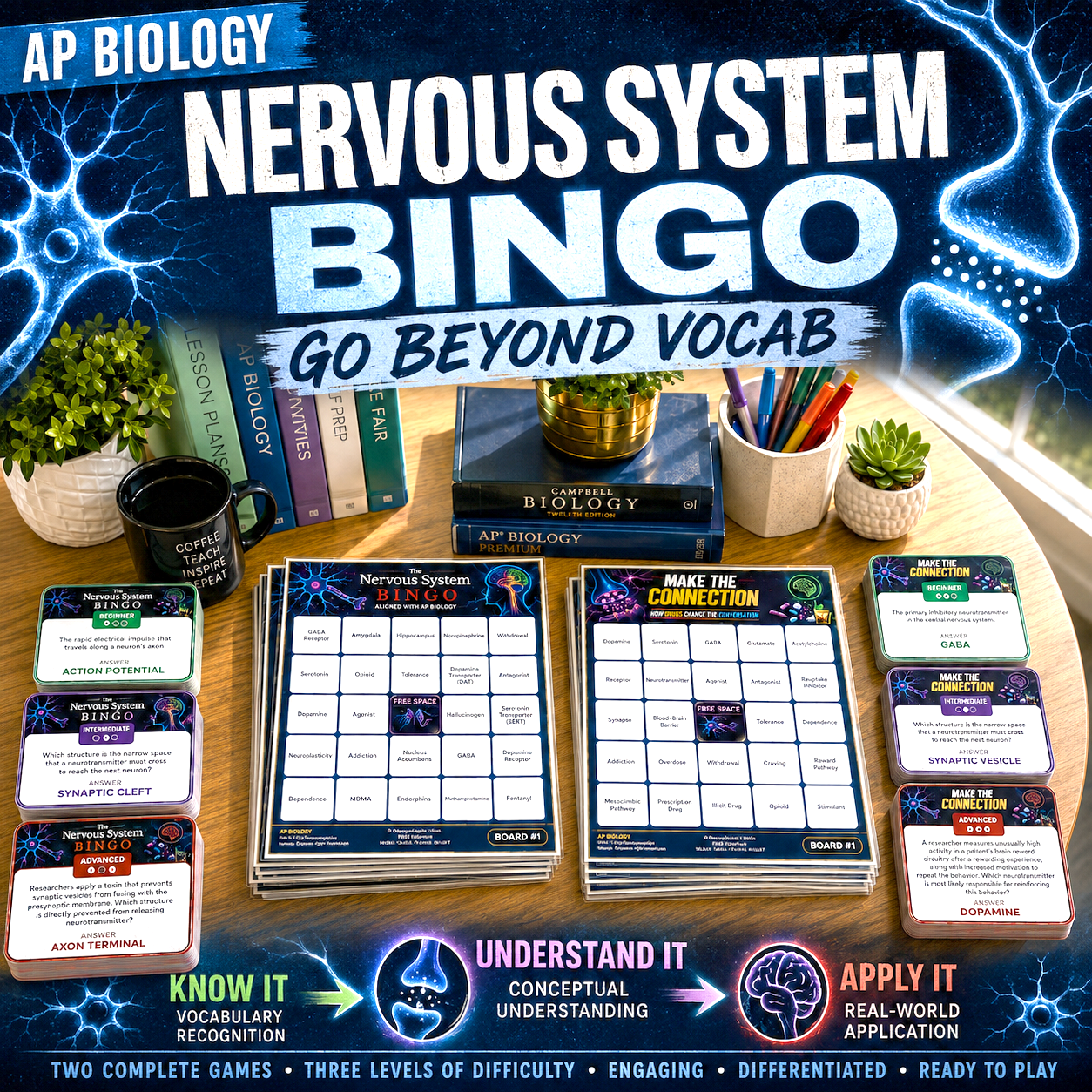 Image 1 of 7
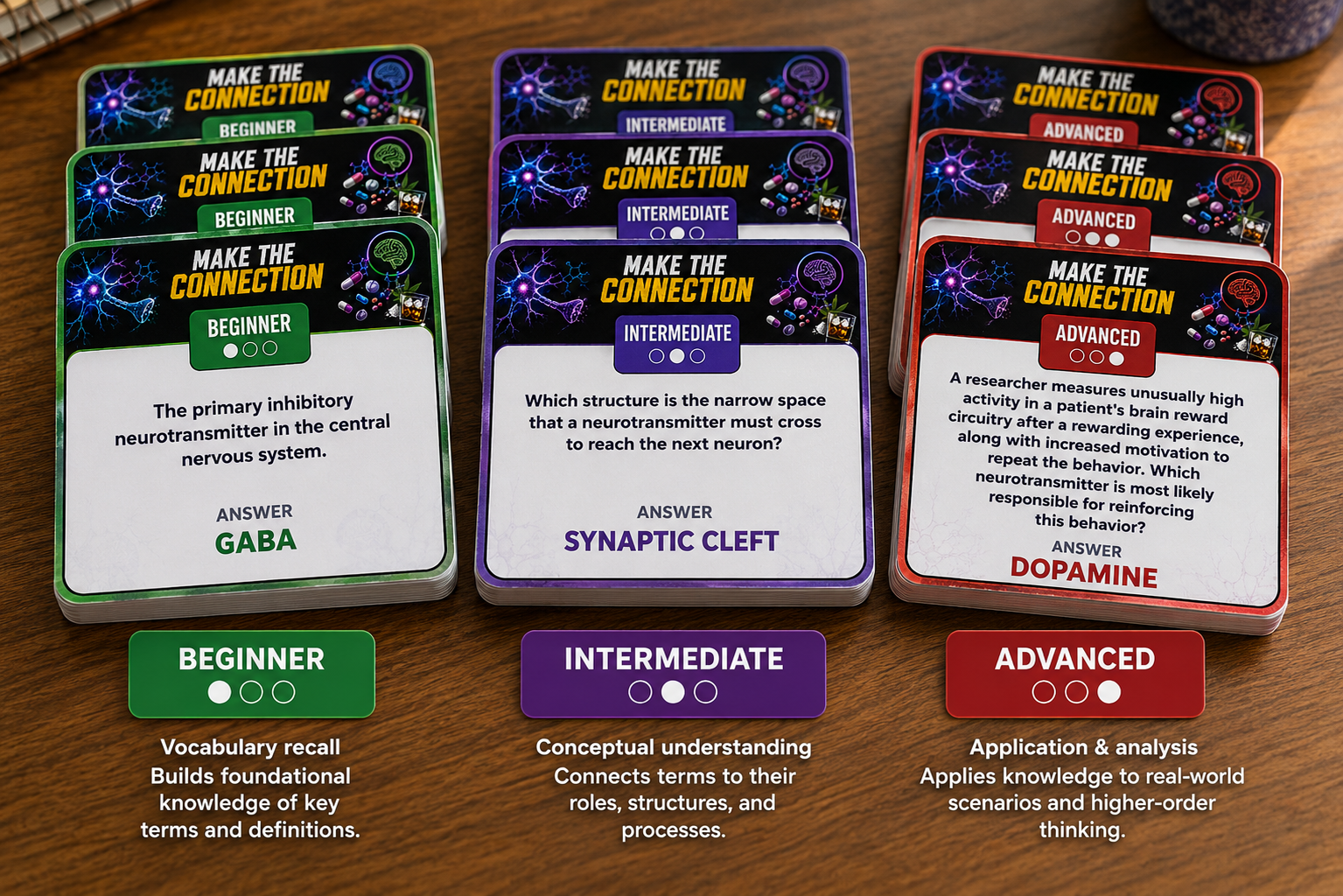 Image 2 of 7
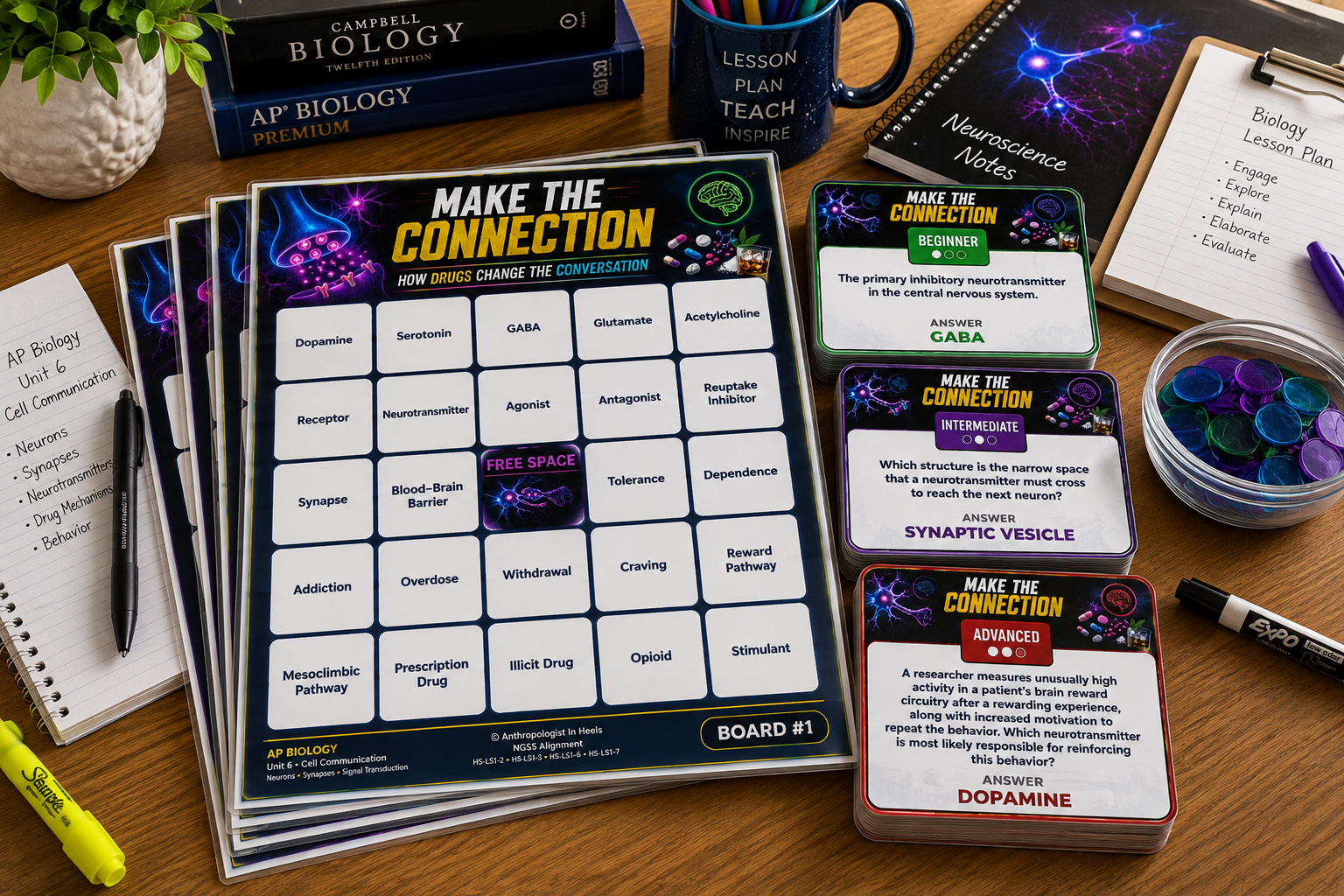 Image 3 of 7
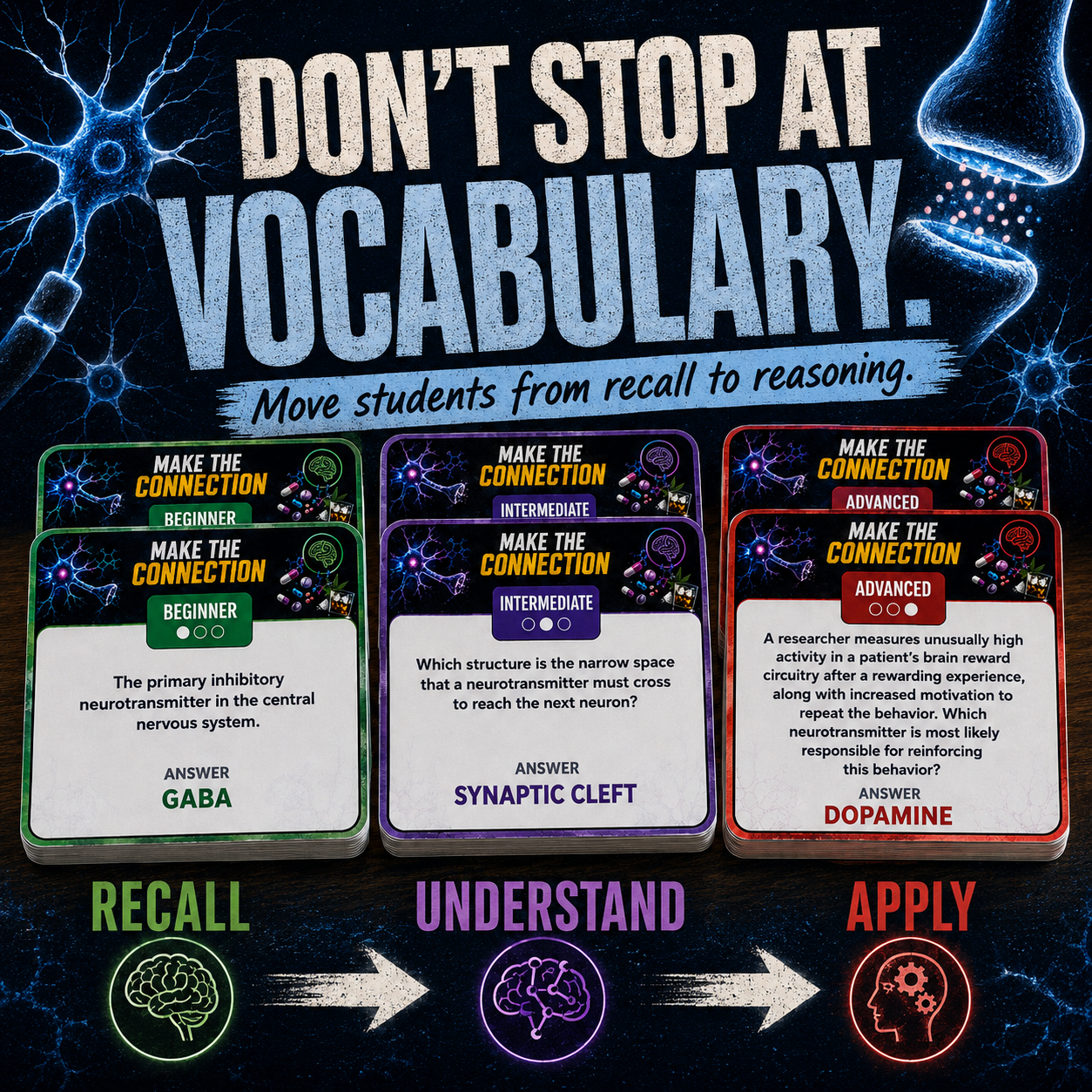 Image 4 of 7
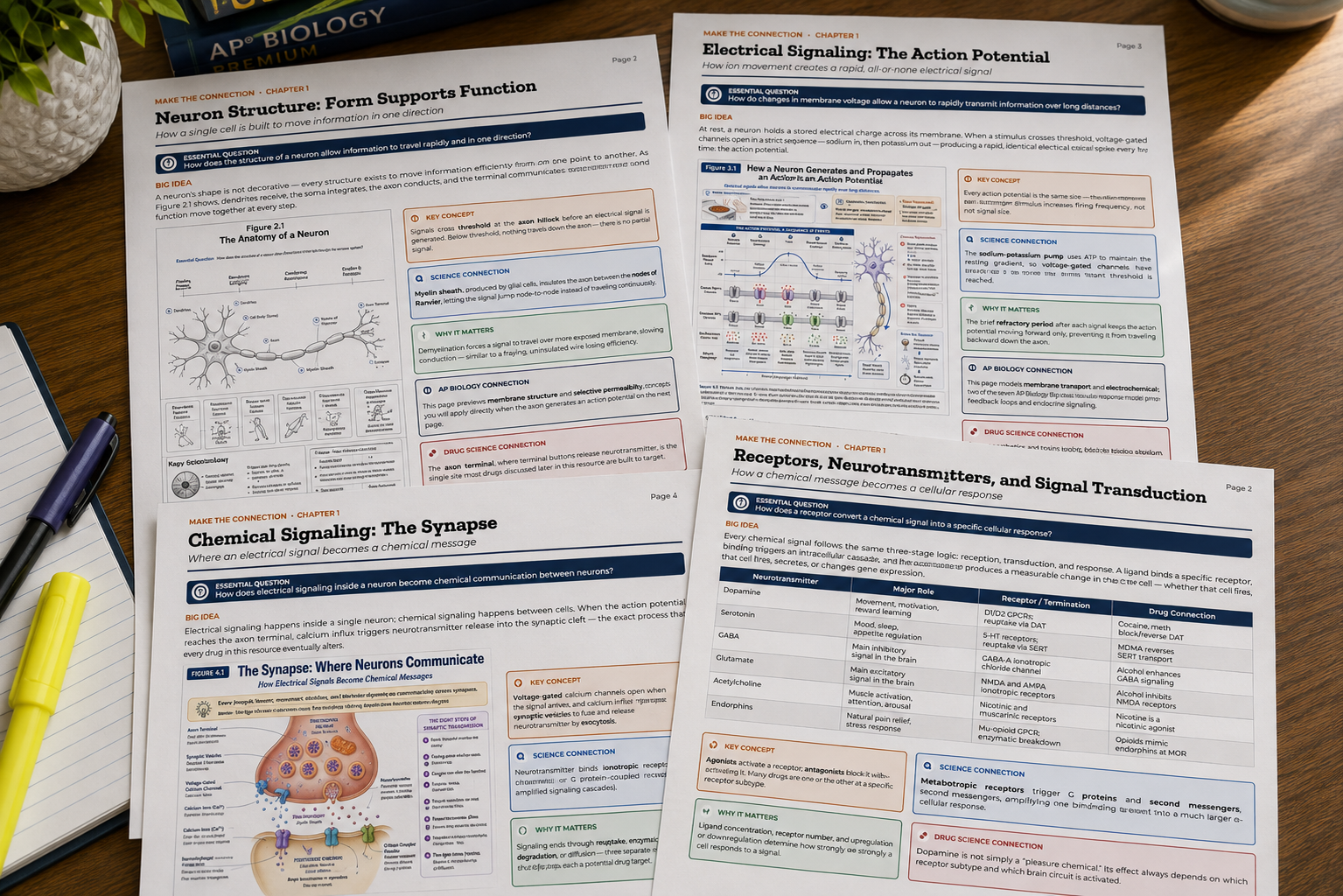 Image 5 of 7
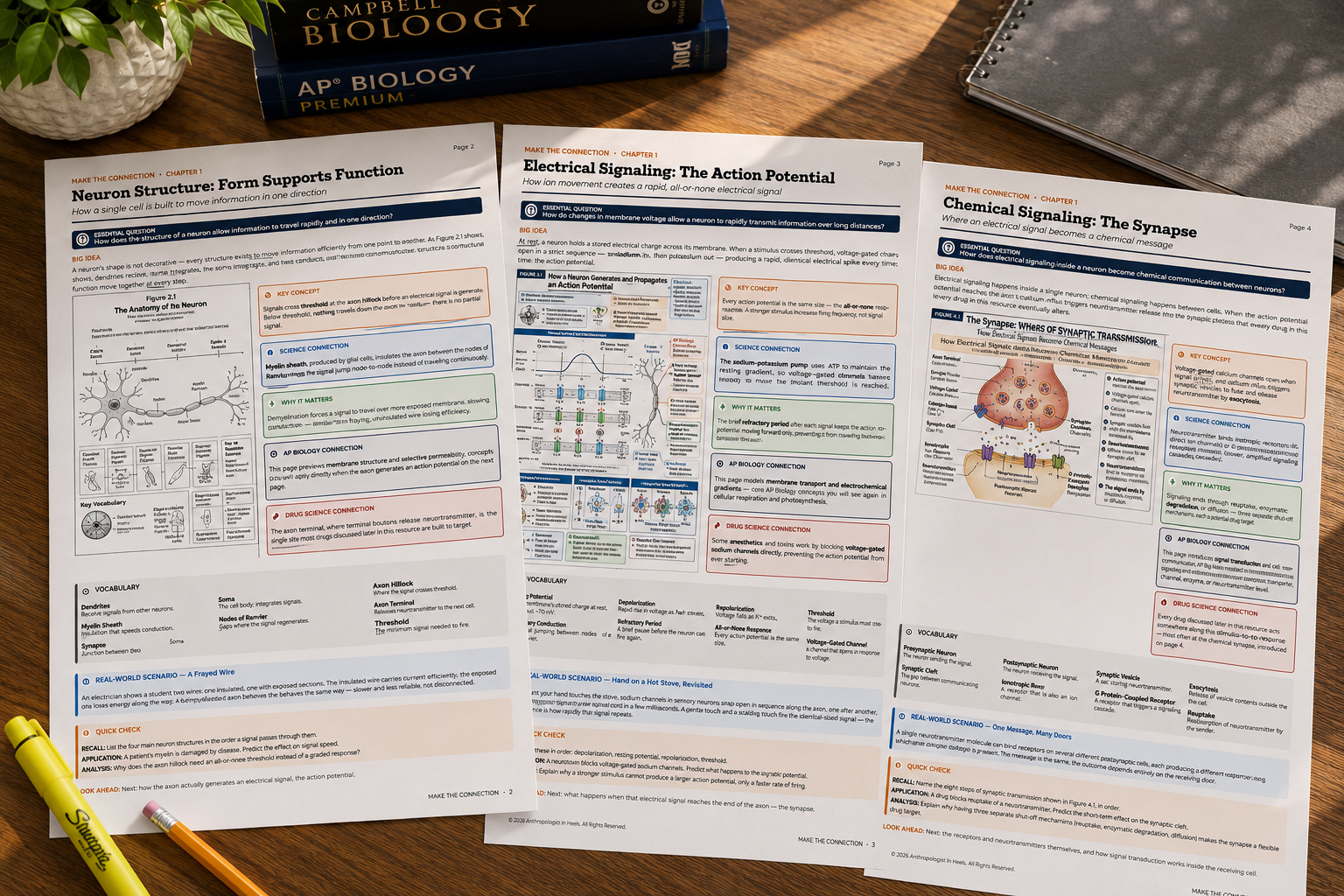 Image 6 of 7
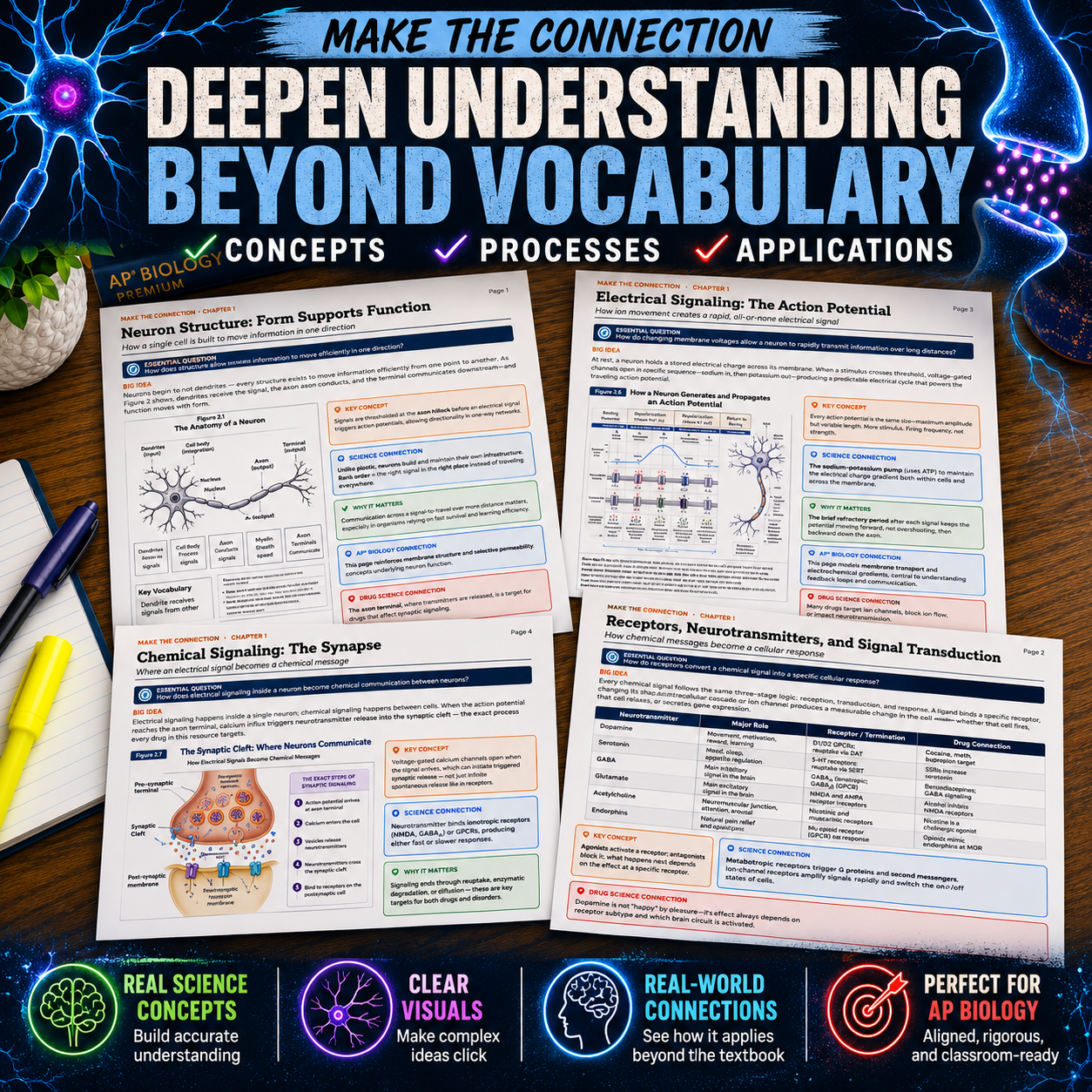 Image 7 of 7