How to Teach Logical Fallacies Through Social Media: A Critical Thinking Bingo Game for Grades 8–12
Hello friends,
As you can probably tell from my store, I have been adding new bingo games almost as quickly as I can make them. This week I have been especially focused on my high school philosophy, critical thinking, and logical fallacies games, and these have honestly been such a treat to create.
My first Logical Fallacies Activity & Bingo Game has been a hit, and teachers have been loving it. That encouraged me to keep going. I followed it with a game about cognitive biases and another exploring the philosophy of ethics. Today, I added a new logical fallacies game to the collection, but this one takes the concept in a different direction: social media and the kinds of arguments students encounter online.
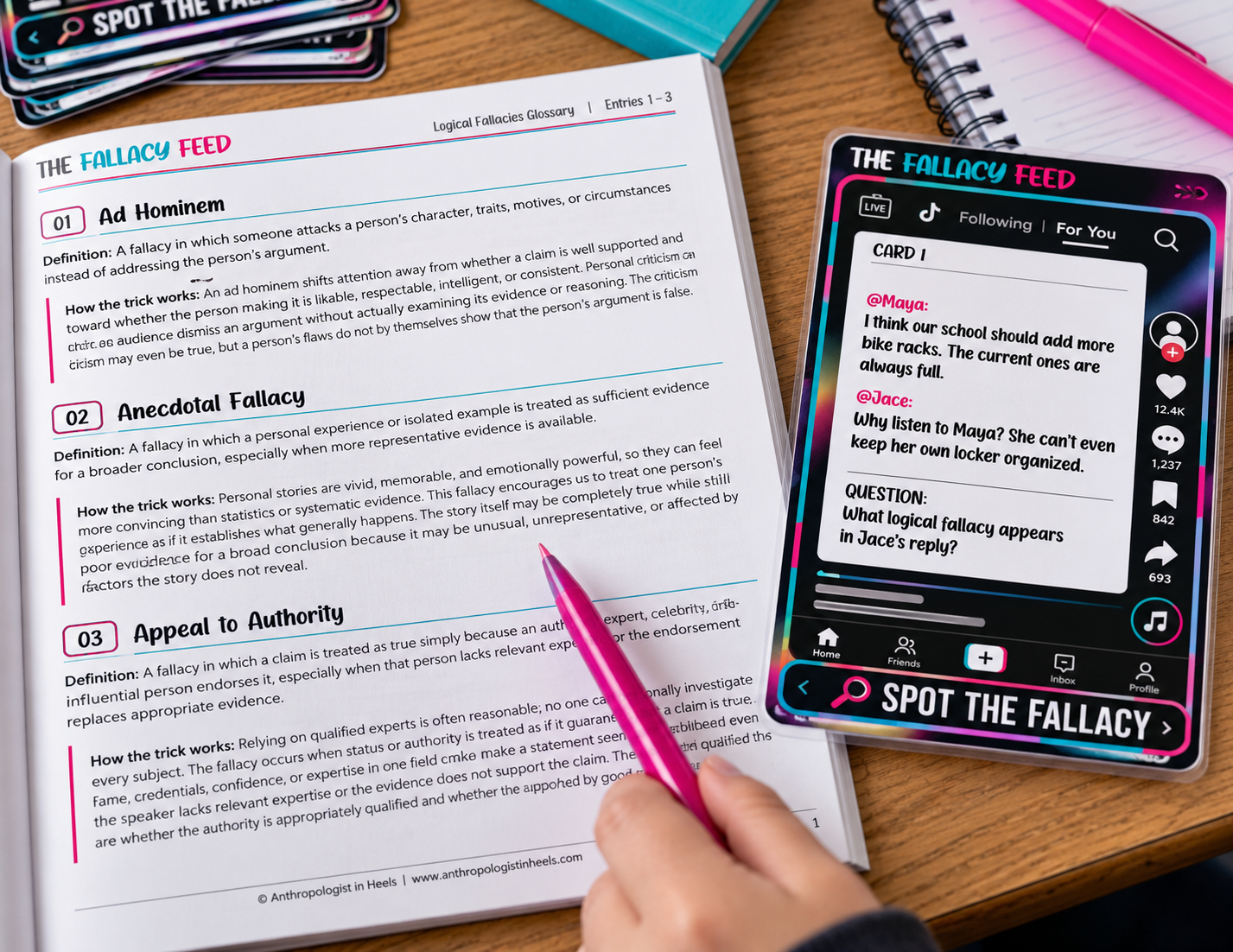
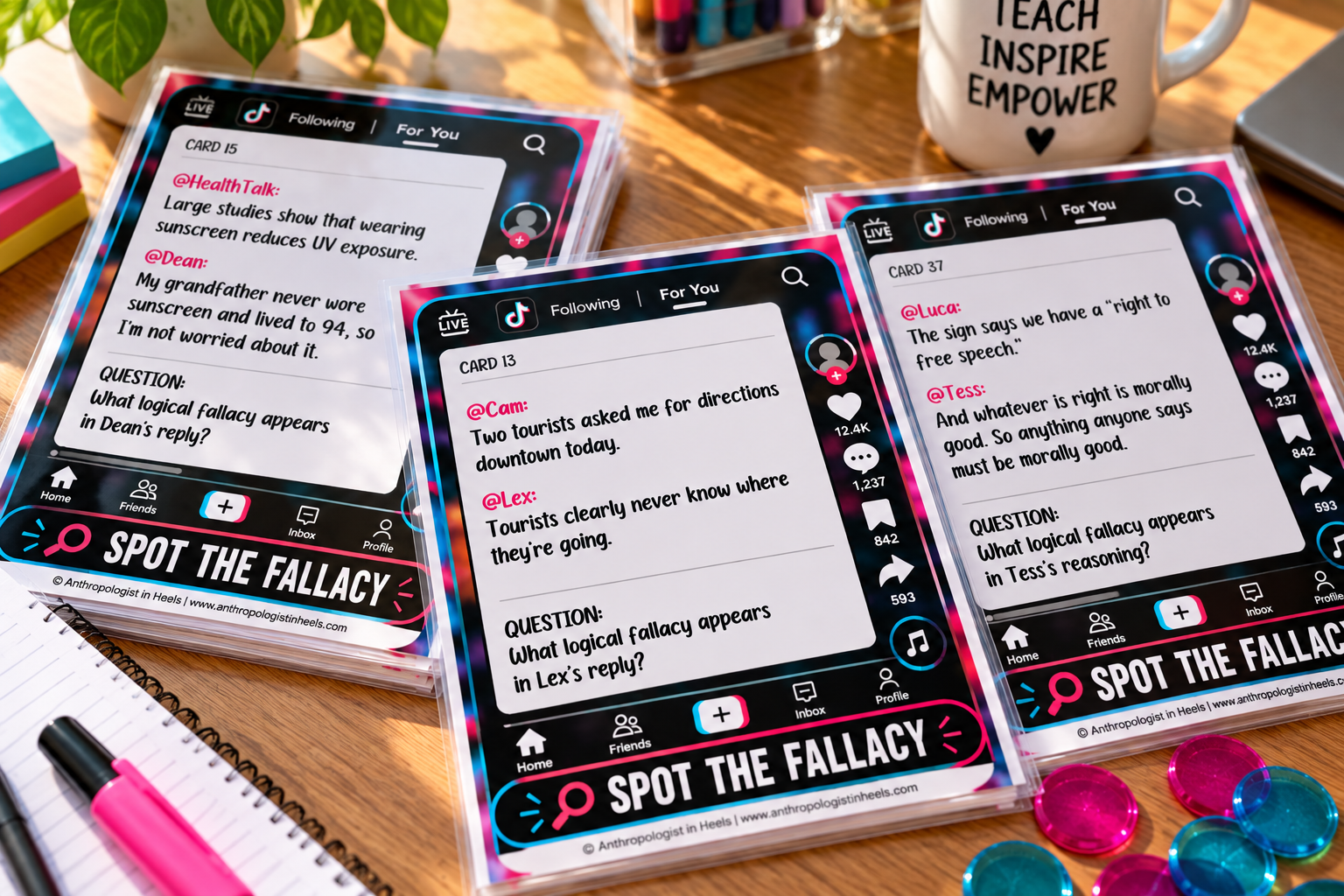
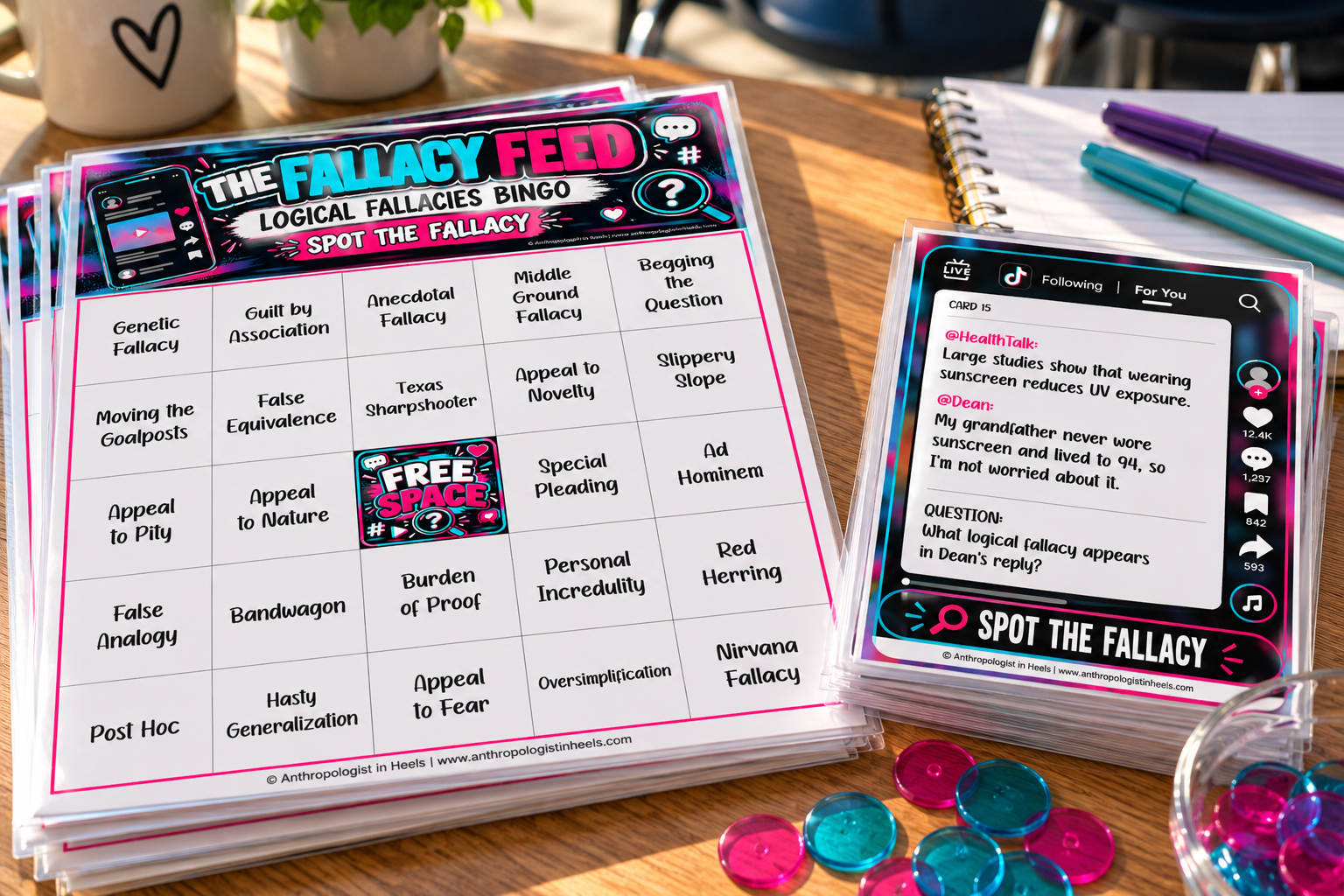
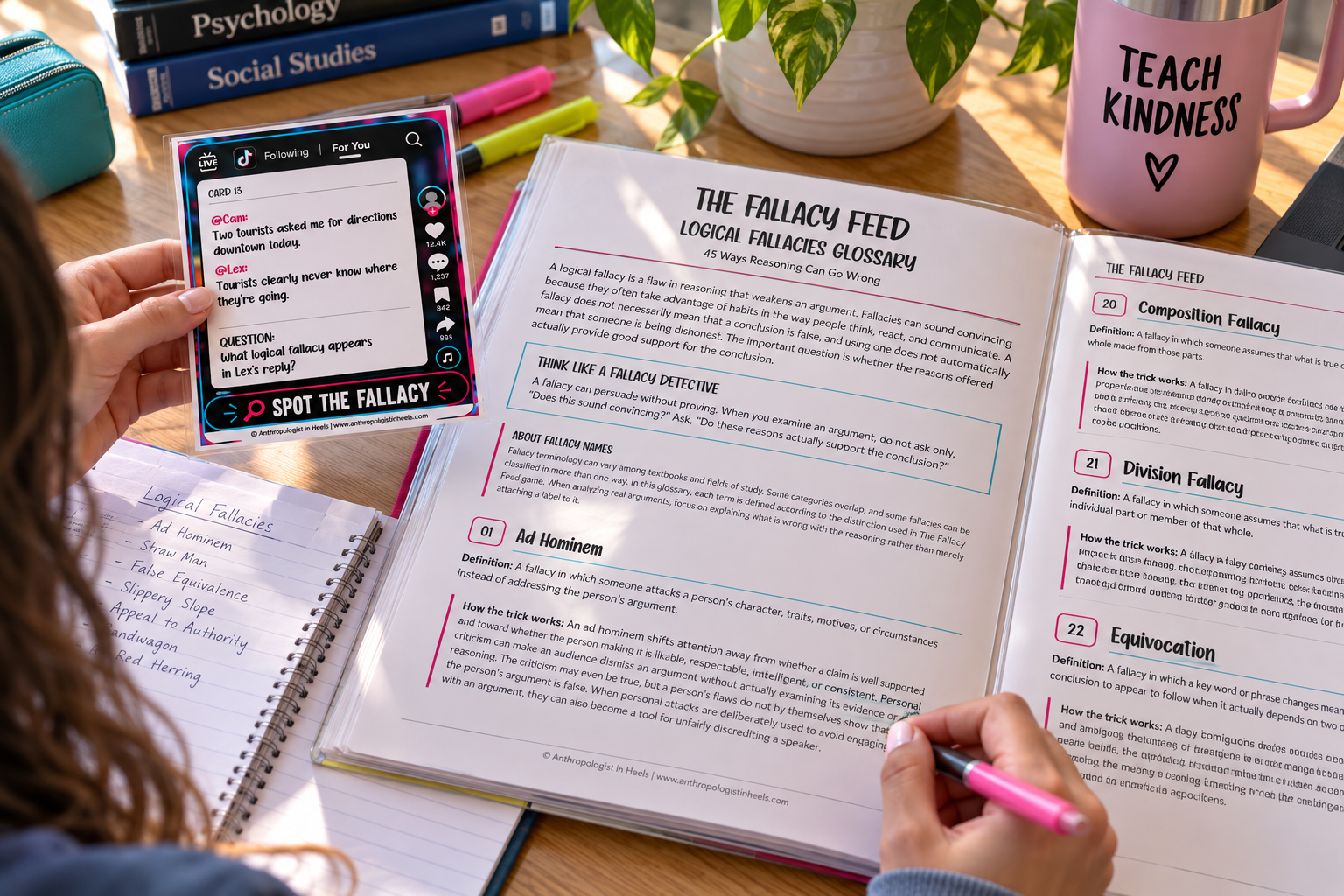
If you look at the images above, you can see that the calling cards are designed to look like interactions students might see while scrolling through social media. Instead of giving students a definition and asking them to repeat it back, the cards present short exchanges and arguments. Students have to stop, read what is actually being said, and figure out what went wrong with the reasoning.
That is really what I want these games to do.
One thing that makes my bingo games different is that I don't want the bingo boards to stand alone. I include student informational text because, while these games are aligned with academic standards, some of the concepts are genuinely challenging. Logical fallacies are a perfect example. Students benefit from having something they can read, reference, and return to while they are learning.
For this game, I created a 17-page student guide covering 45 logical fallacies. Each fallacy has a clear definition, but I didn't want to stop there. Every entry also includes a “How the trick works” section. This is where students begin to see why faulty reasoning can be so persuasive. They learn to recognize weak evidence, misleading comparisons, emotional appeals, manipulation, unsupported conclusions, and other reasoning problems that can easily slip past us when an argument sounds convincing.
I really like the idea of students becoming fallacy detectives. Instead of simply asking, “What is this fallacy called?” I want them asking bigger questions: What is the actual claim? What evidence is being offered? Is something important missing? Is the speaker distracting me from the original issue? Are these reasons actually enough to support the conclusion?
That distinction matters to me because recognizing the name of a fallacy is only the beginning. The real skill is being able to recognize faulty reasoning when you encounter it in the wild—in social media posts, advertising, online discussions, videos, news, and everyday conversations.
I took the same approach with the teacher answer key. It does more than tell you which square students should cover. Each calling card includes the correct fallacy and an explanation of why the reasoning is flawed. That gives teachers something they can immediately use for discussion, especially when students disagree about an answer.
And I actually think those disagreements can be some of the best moments in the game.
If one group thinks an argument is Bandwagon and another thinks it is Appeal to Common Practice, don't rush to give them the answer. Have them defend their choices. Let them go back to the glossary. Ask them to point to the specific words in the argument that support their interpretation. Suddenly, a bingo game has turned into a conversation about evidence, reasoning, language, and argumentation.
There are also several ways I can see teachers using this resource. Students can play with the glossary beside them when they are first learning the fallacies, and then play again later without it as a review. Teachers can pause after particularly interesting cards for quick mini-lessons, have students explain their reasoning before a square can be covered, or ask students to rewrite a flawed argument so that it becomes logically stronger.
You could even extend individual cards with one additional question:
“What evidence would you need before you would accept this claim?”
That one question takes the activity beyond identifying logical fallacies and directly into media literacy and evidence evaluation.
For me, that is the point of creating a game like this. The bingo is what gets students engaged. The thinking is what I actually want them to practice.
Students are still trying to get five spaces in a row, but along the way they are reading arguments, evaluating evidence, recognizing manipulation, distinguishing between similar reasoning errors, and explaining why a conclusion does—or does not—follow from the reasons being offered.
And those are skills I want students carrying with them long after the bingo chips have been put away.